Report: Namahage Sedo Festival (Matsuri) なまはげ柴灯祭り
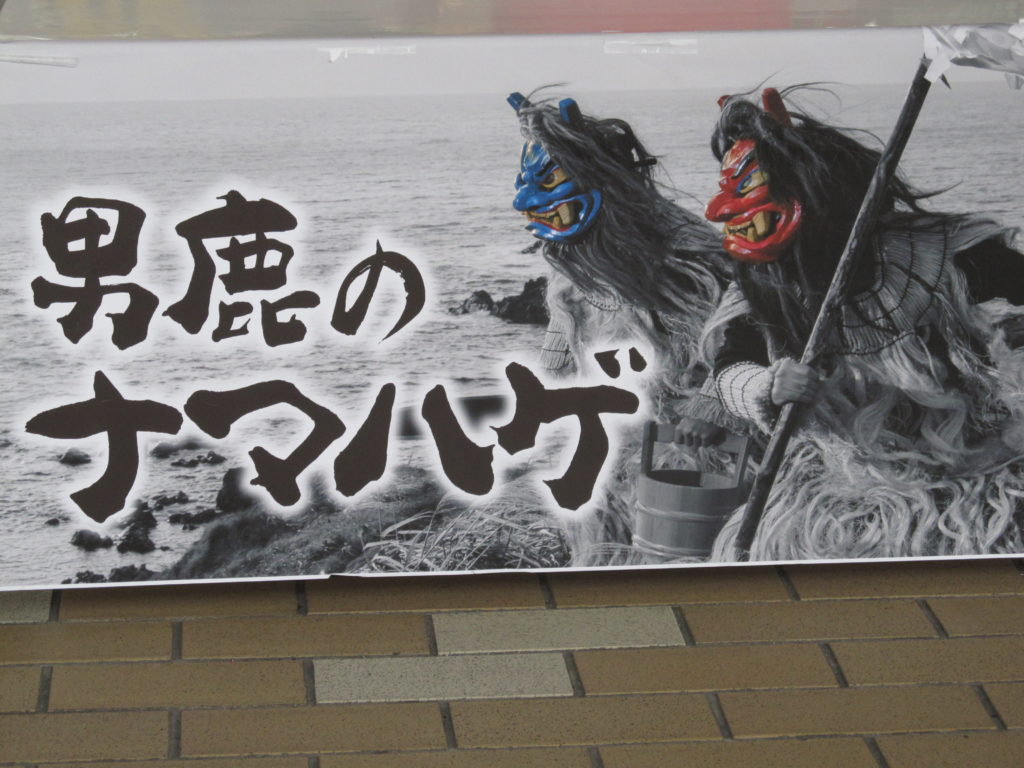
Date 18:00 ~past 20:00, second weekend (Friday~Sunday), Feburuary every year,
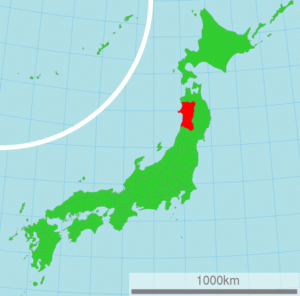
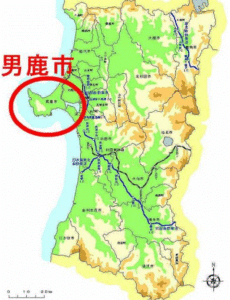
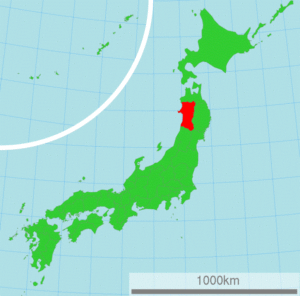
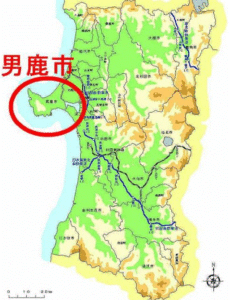
Location Shinzan shrine, Oga city in Akita prefecture
How to get there Refer to the following
Introduction
Even if you are interested in Namahage, it is still difficult to see a real. Ritual of Namahage involve visiting a personal house, so you must gain access to the house. But if you want to see Namahage, the best approach is to visit to “Oga Shinzan Denshokan” or go to the festival, “Namahage Sedo Matsuri”. The “Oga Shinzan Denshokan” reproduces ritual every day on time.
This time, I’ll introduce the “Namahage Sedo Matsuri” (word of matsuri means festival).
This festival is held on the second weekend of February in Akita prefecture. I went to Sunday last year (2019). I will descrive at that time.
Firast, we have three ways to approach Akita, one is by Shinkansen (it costs about \15,000~20,000). Second is by airplane (it costs about \20,000~35,000), third is by express bus (it costs about \6,000~10,000). I don’t recommende the airplane in this case, because price is high and it takes long time beside. Shinkansen takes about 5~6 hours; airplane takes 1 hour (plus bus for about 40 minutes) and express bus takes about 10 hours. I took a night bus when I went there.
*In all of the above routes, the starting point is from Tokyo.
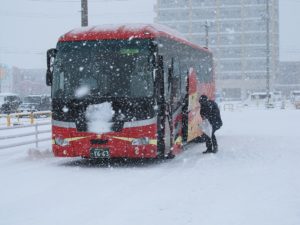
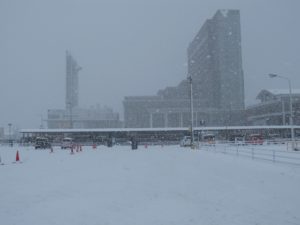
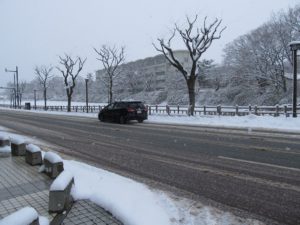
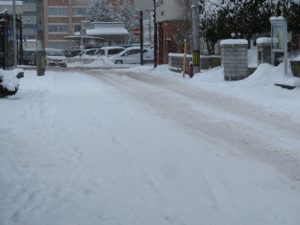
In the morning, about 8:00, I arrived at Akita station. When I got off the bus, the town was covered with snow. Snow continued falling until afternoon that day. It hardly ever snows in Tokyo in winter, but the Sea of Japan side has many deep snow district. If you want to go,you may need to take snow shoes. Main street is cleaned, but when you enter one step inside, the backstreets, they are covered with fresh snow especially on side steps. Whenever you put your foot on the snow, your feet would slide into the snow up to your ankles. It is hard to walk. I walked putting my feet in somebody’s footprints. I remembered it took longer than I imaged.
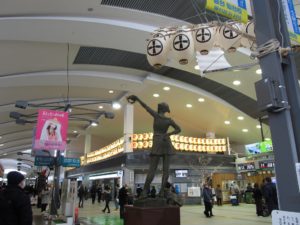
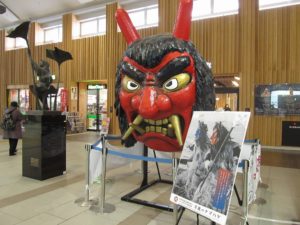
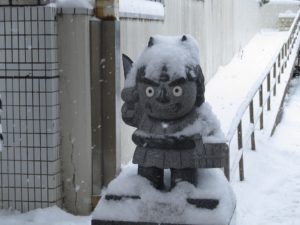
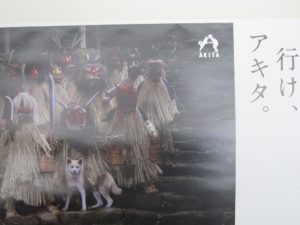
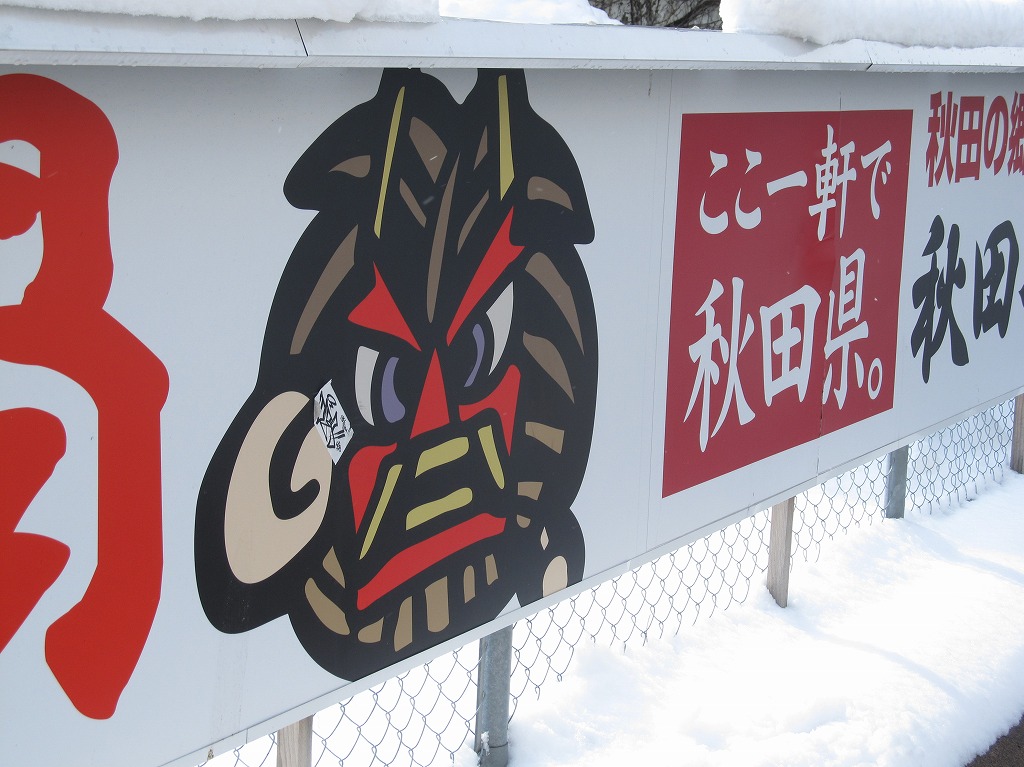
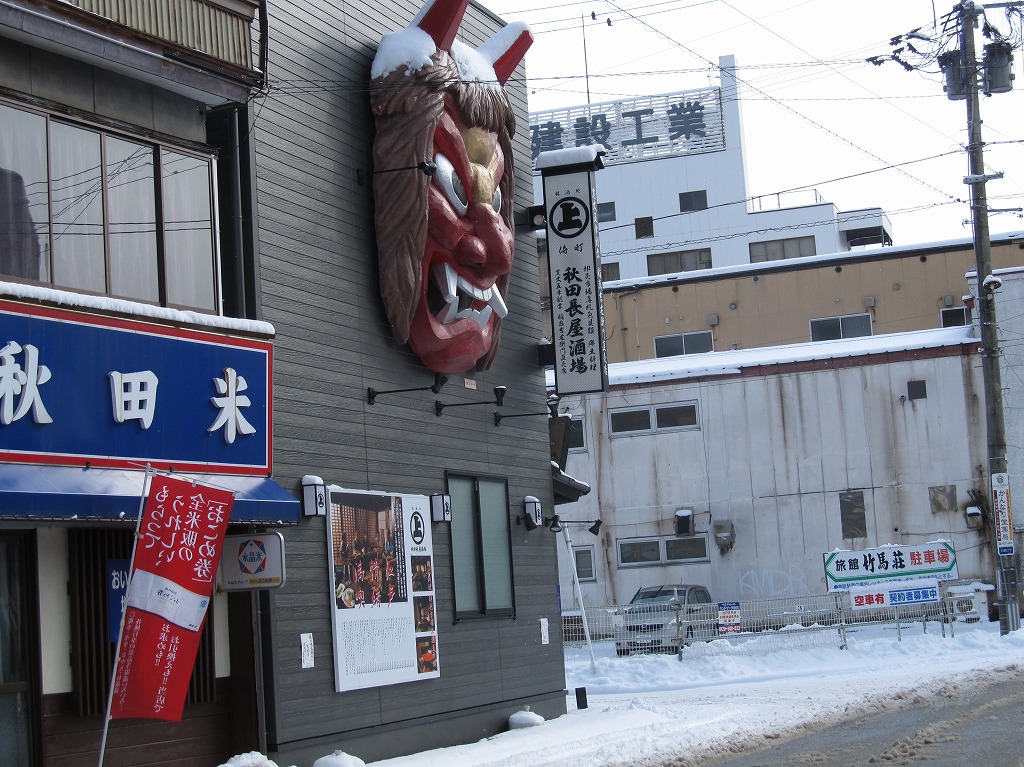
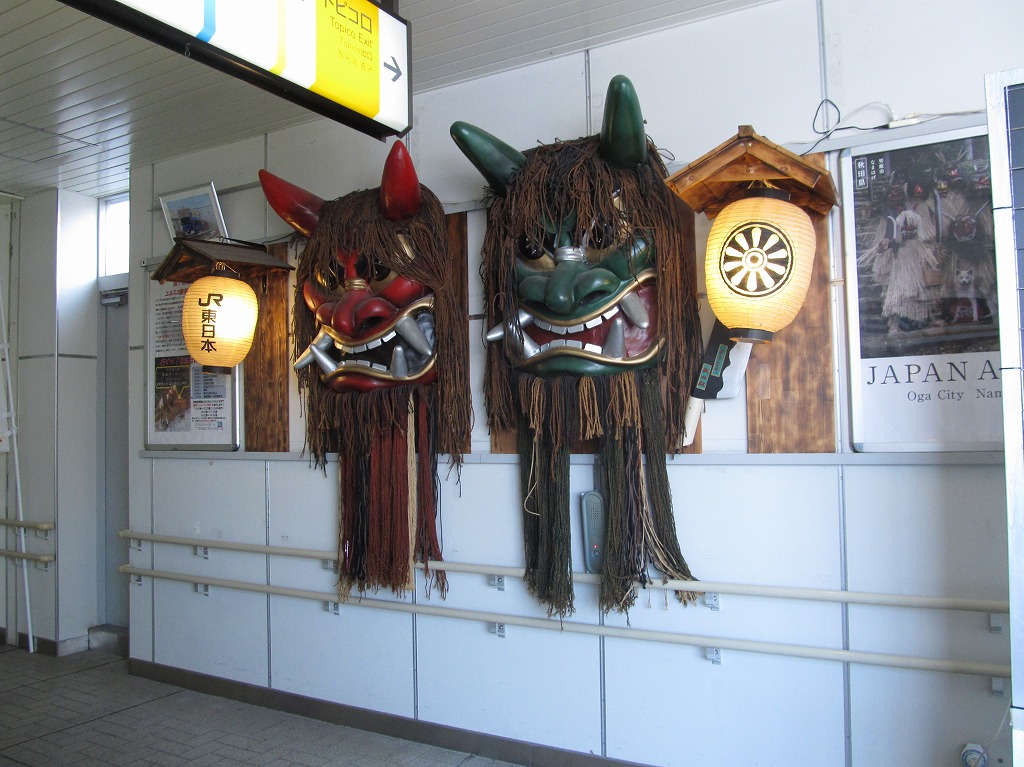
Akita station has a shopping center. You can look for sops to eat foods and keep yourself warm. And you may be surprised to find many goods of Namahage, not only in the the souvenir shops but all over the town. We can know that Namahage in Oga region only but it is an important tourist attraction for all Akita.
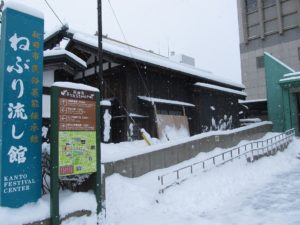
Neburi Nagashi Hall
The festival will start from 6 pm. It takes about 1 hour from Akita station to Oga station by train and 40 minutes from Oga station to the festival venue bu bus. So if you have time, though it is fine to stay in the waiting room of the station, I recommend two places. One is the “Akita City Minzoku Geino Densho-kan” (Neburinagashi hall). “Neburi Nagashi” is one of the most famous festival in Japan. It is called “Akita Kanto Matsuri”. This festival held in August every year.
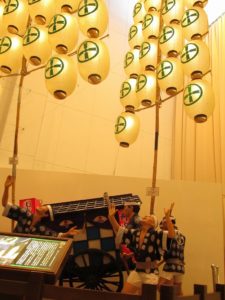
Kantoh are wooden poles with many lanterns. The top of the pole is 15 meters high and the total weight is approximately 50 kilograms. Performers balance it by putting it on their hnads, foreheads, waists or shoulders. You can see the Kantoh and performance on time everyday and also exoerience it. In addition, the entertainment of Akita city is introduced, too.
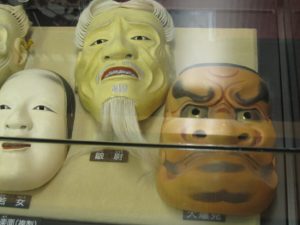
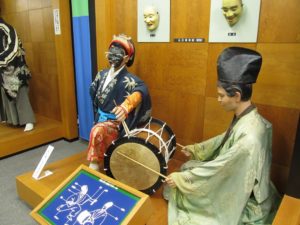
Another place is the Akita Museum of Art. The main exhibit is the painting by Tsuguharu Fujita, called “Ritual in Akita” (height 3.65 m, width 20.50 m). This painting is worth watching it at least once. You might be overwhelmed by the power and technique. I think it is not an exaggeration to stay this museum was built for this piece of art.
Yamahage
After leaving the museum, I entered the next building. At that time, I encountered a mysterious monster man by accident.
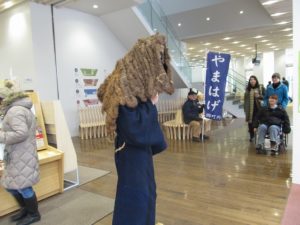
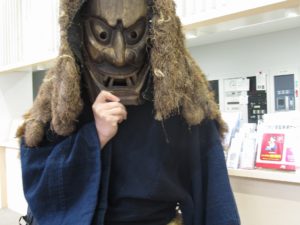
He had long golden hair, and a big wooden face like an ogre. He wore deep blue clothes (Japanese Kimono) and was walking slowly. I was surprised and took a picture quickly. He stopped in front of me. I think he glared at me. But I noticed soon the man stopped to pose for me, because another man came beside holding a flag. On the flag the word “Yamahage” was written. After taking a picture, I heard about “Yamahage”.
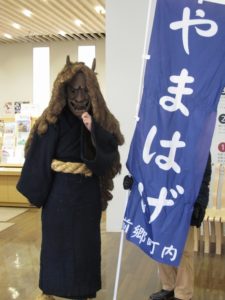
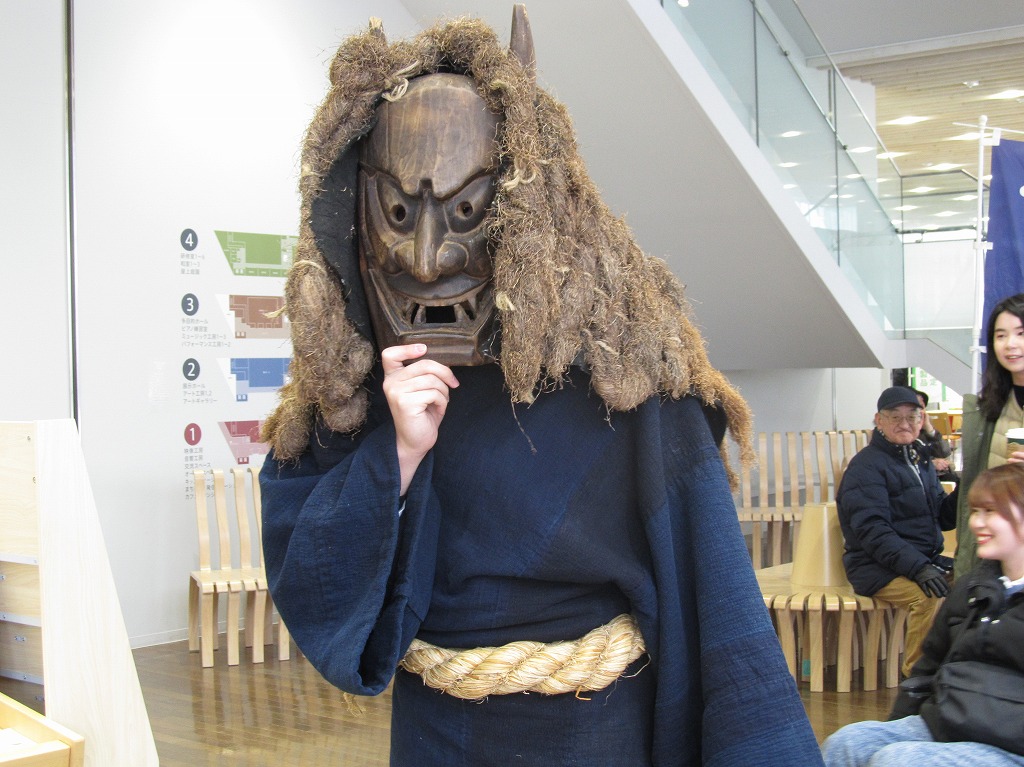
The man holding a flag told me that ‘yamahage’ is a sacred visitor like ‘Namahage’ at Maesato town in Akita city. Just like Namahage, Yamahage visits each house in the town at the end of year. Tourists can watch them. I didn’t know about Yamahage. There are things we can’t know unless we actually visit the place. This accident was lucky for me.
Akita station again
Time has come. I went to buy the ticket to go to the Oga station by special train. This train will leave at 15:39 from Akita, and arrive at 16:29 at Oga. But, surprisingly, all were sold out. I guess I was too optimistic. Unavoidably, I took the next scheduled train one hour later. Like the proverb goes, “When one door shuts another opens”, while sitting in the waiting room, Namahage suddenly emerged in the concourse of the station.
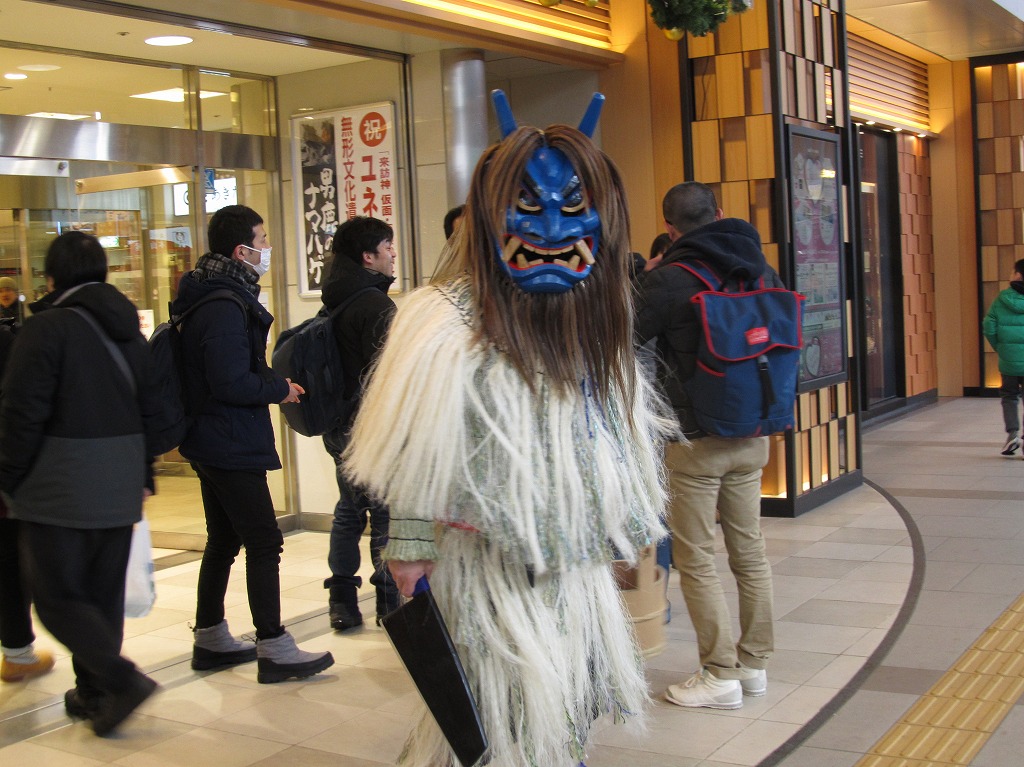
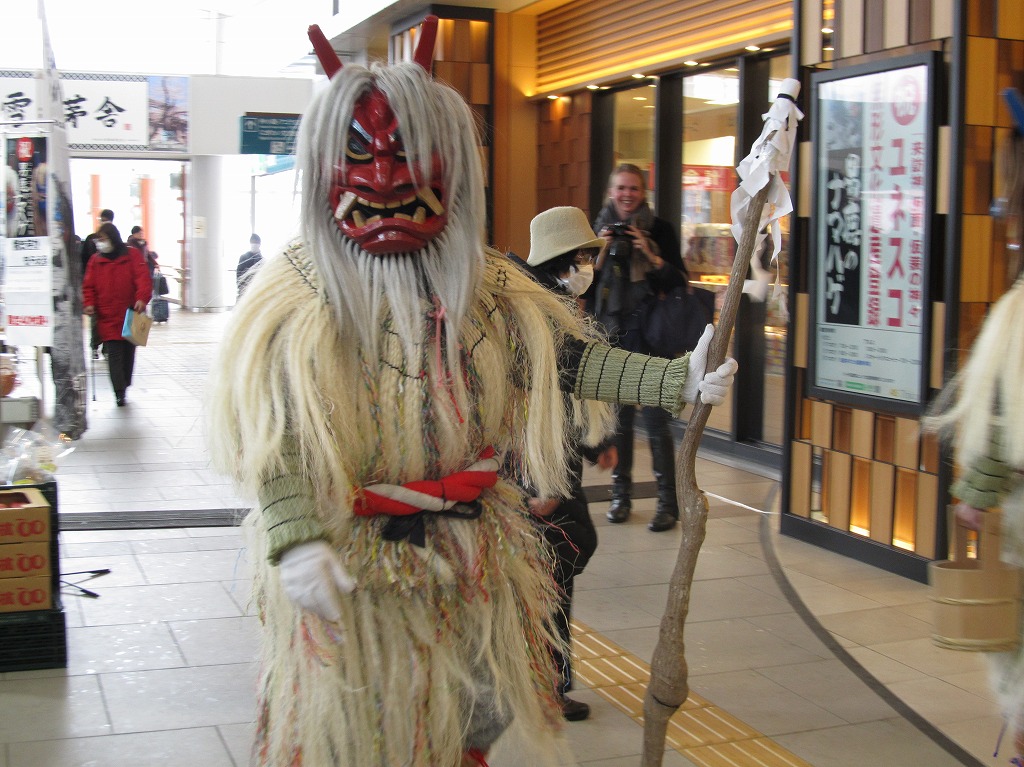
I didn’t know why they emerged. People were surprised, and a foreigner was taking a picture curiously. I decided to think this was a gift from the sky.
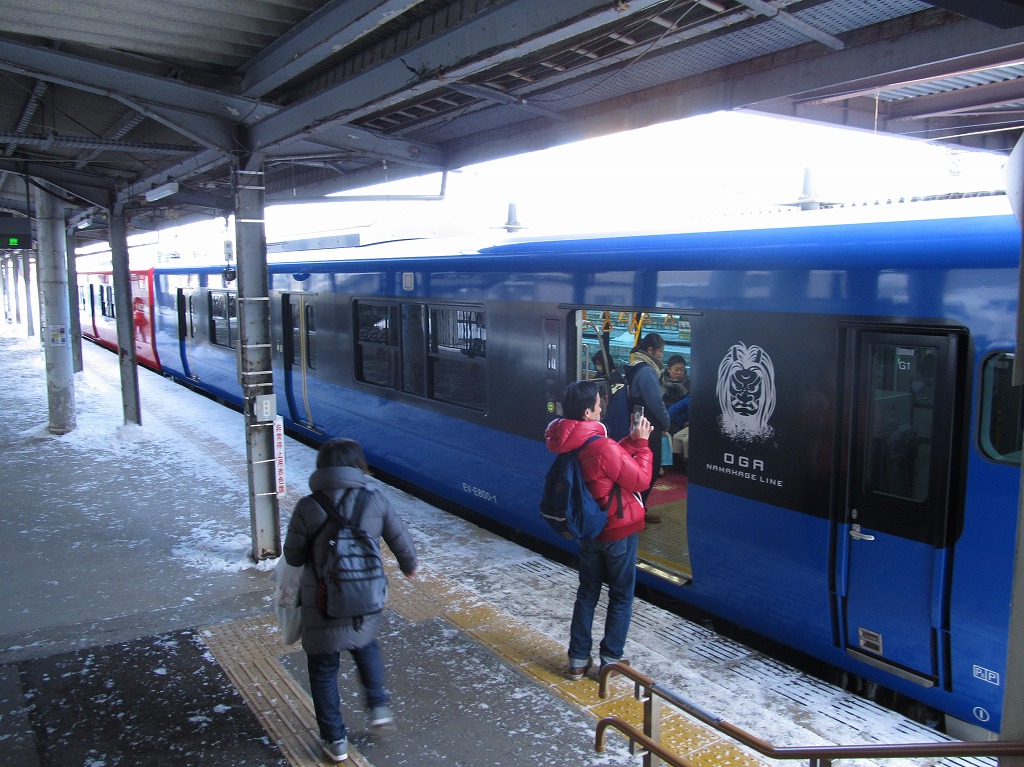
Oga
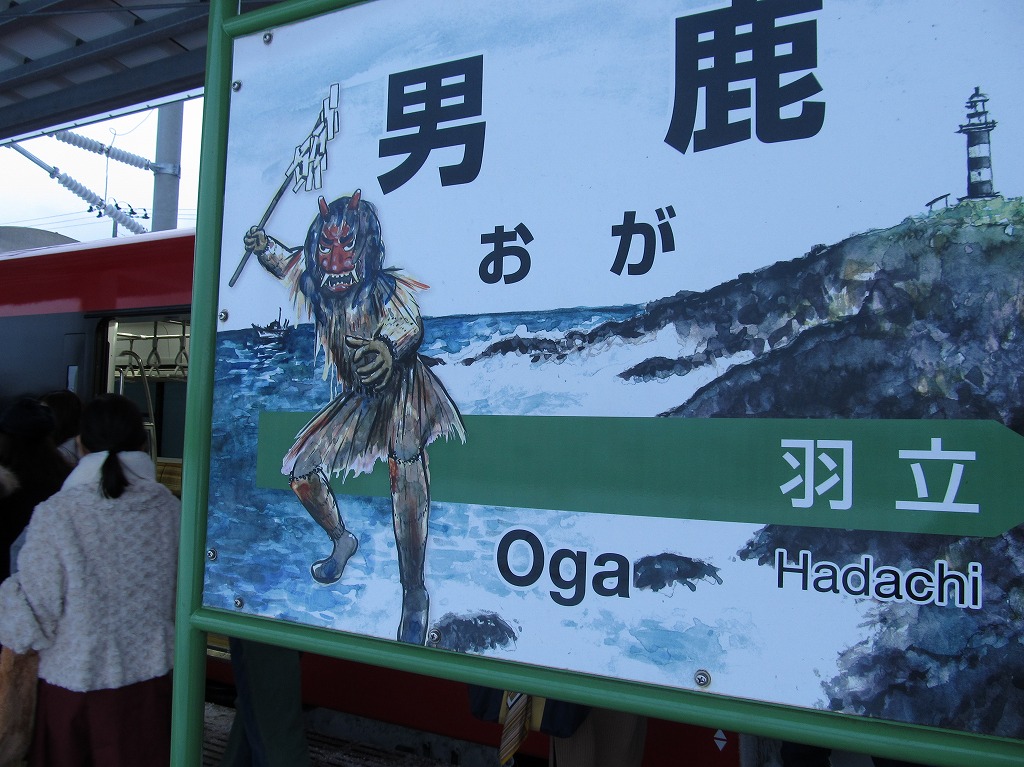
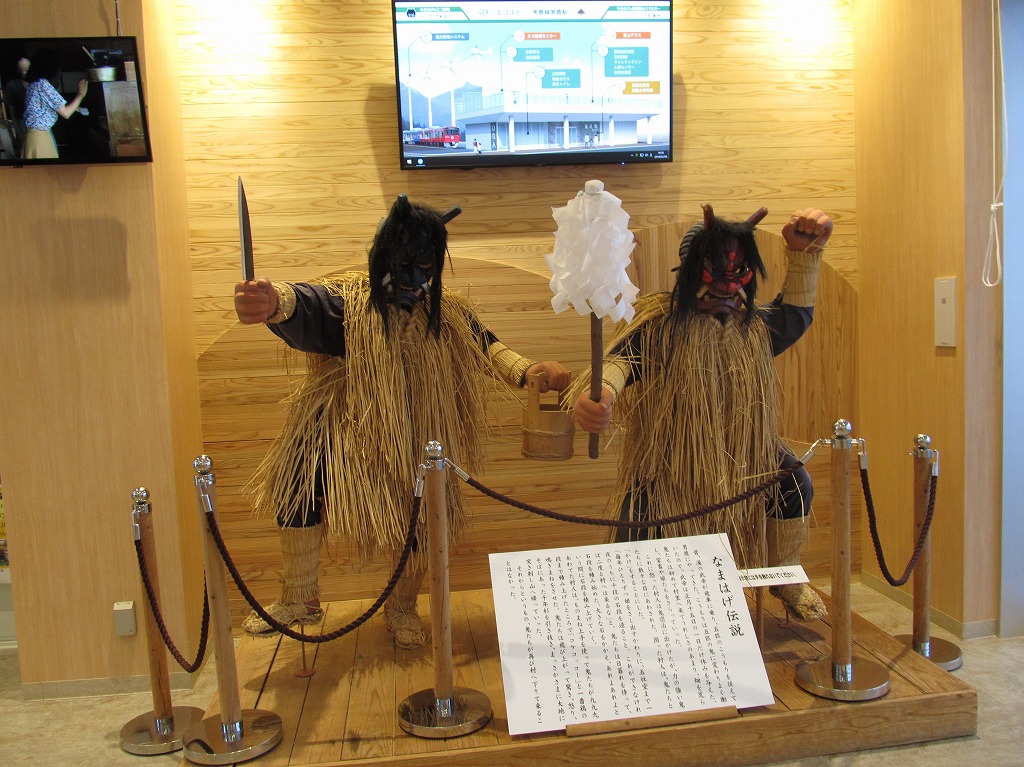
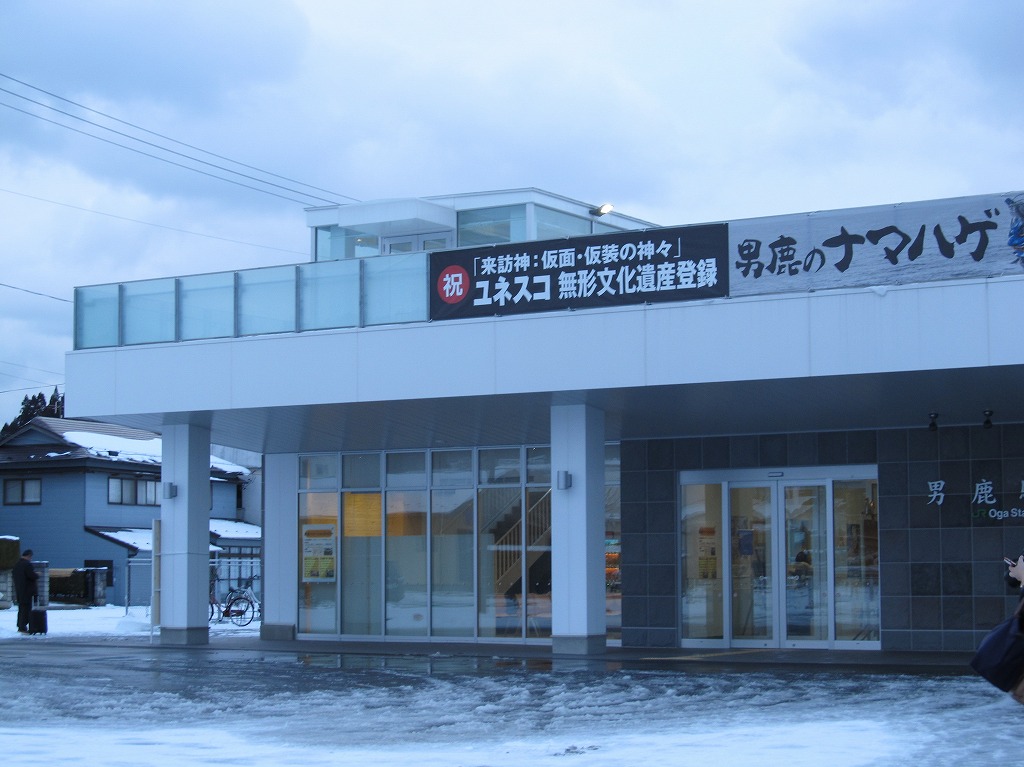
Oga station
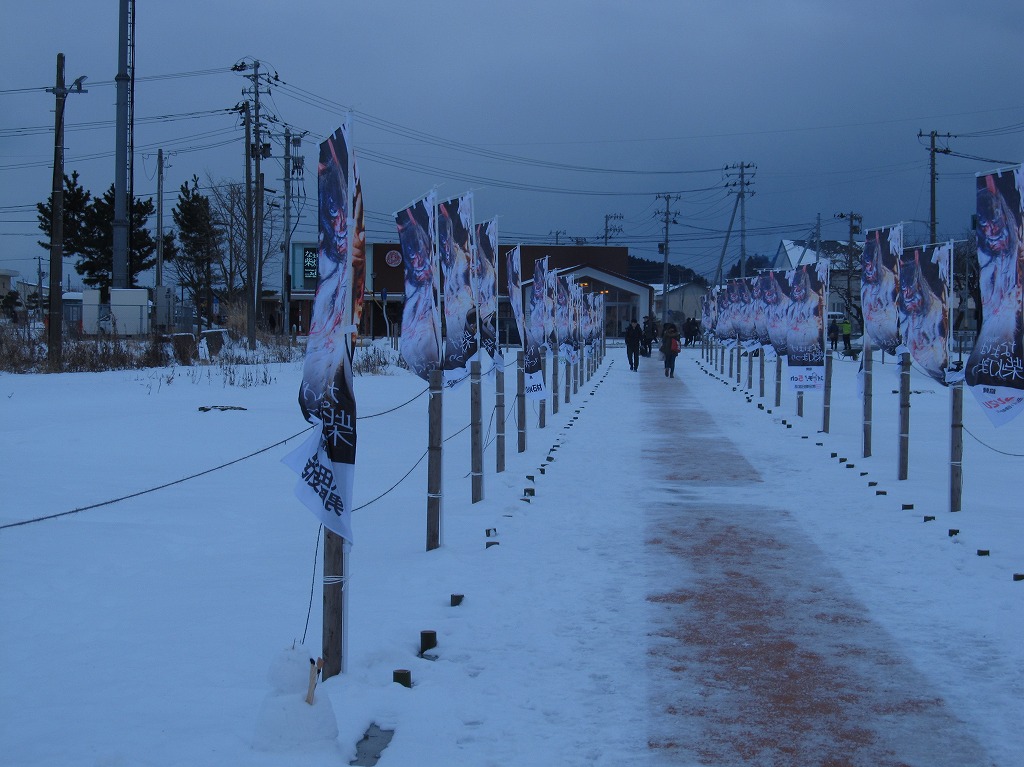
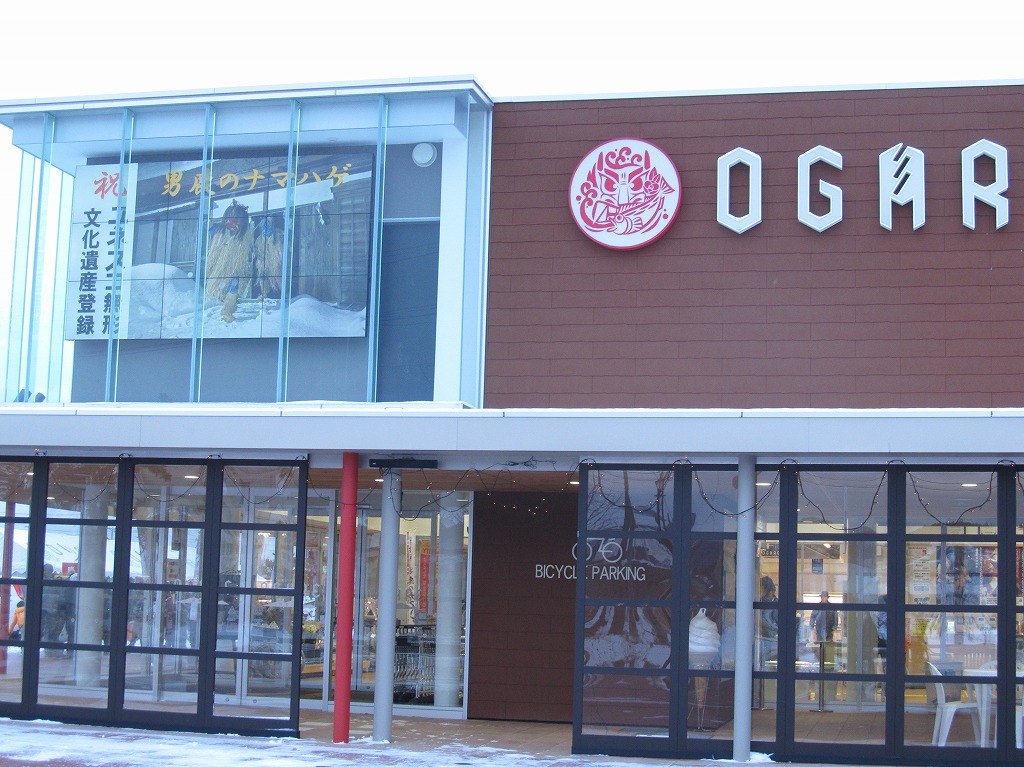
It was 16:30 when I arrived in Oga station. From here we must get on a bus. In front of the station, there is a roadside station “Ogarl”. The shuttle bus to the venue was waiting in front of it, and guides were leading the passengers from station entrance to the bus stop. Not only in the station but also over the window of Ogarl, Namahage glared at us. I can feel this is their home. I couldn’t look into the Ogarl unfortunately. This bus doesn’t run on a fixed schedule. If the bus is full, it will start one by one. It costs \770 (as of 2020).
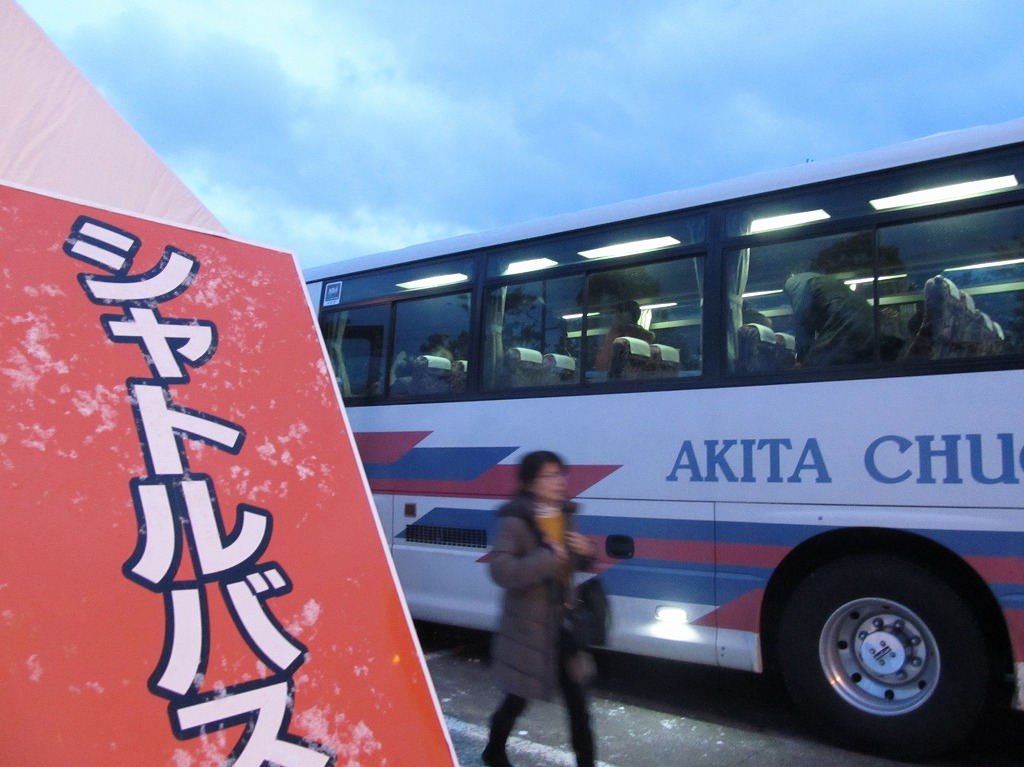
While looking over the earth all at white, after about one hour, we arrived at the parking area.
Namahage Hall
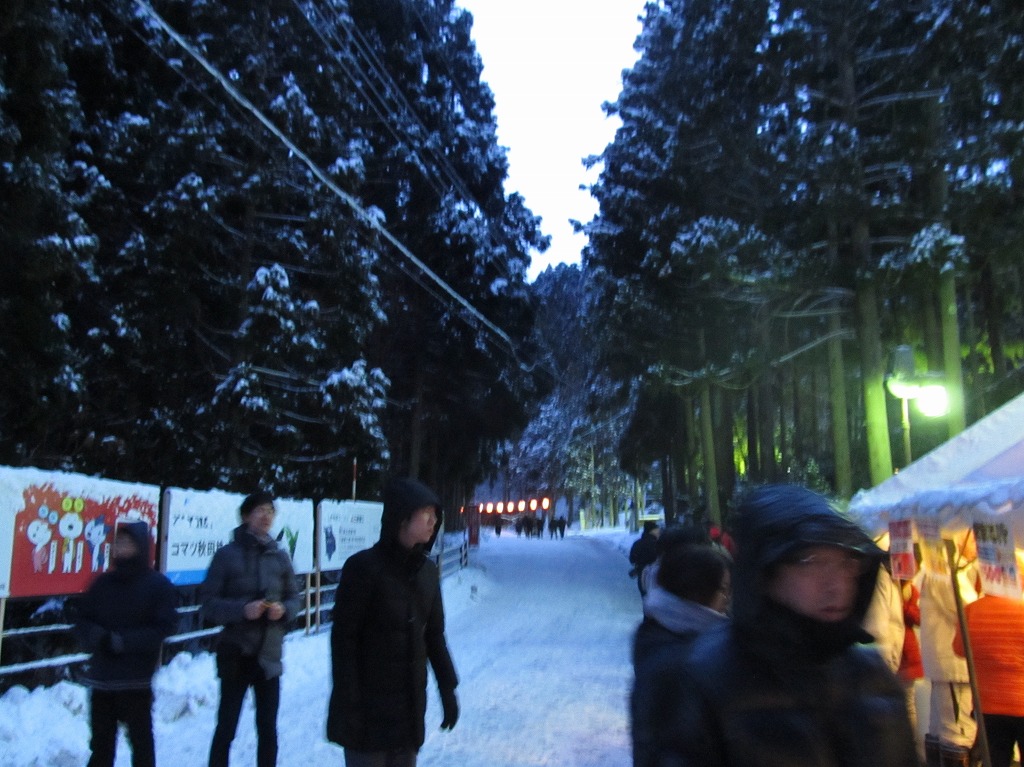
From here, passengers must walk to the venue of the festival “Shimzan shrine”. The snow on the ground was already trodded down on and was firm. It is easiest walk than in the city despite the fear of slipping.
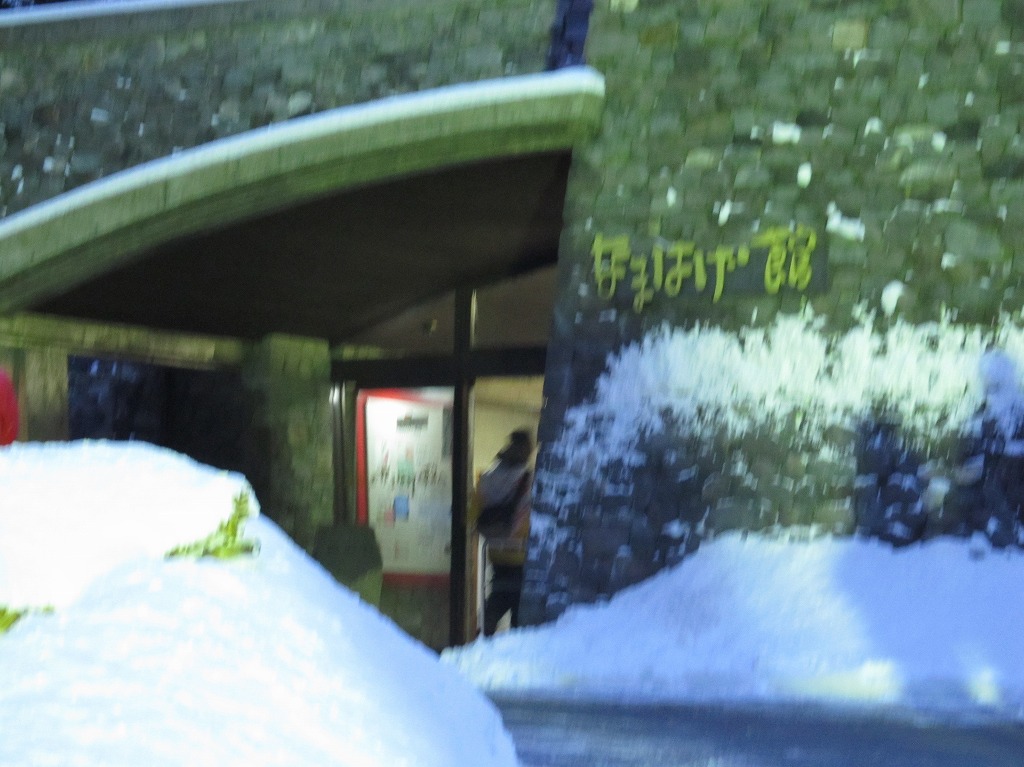
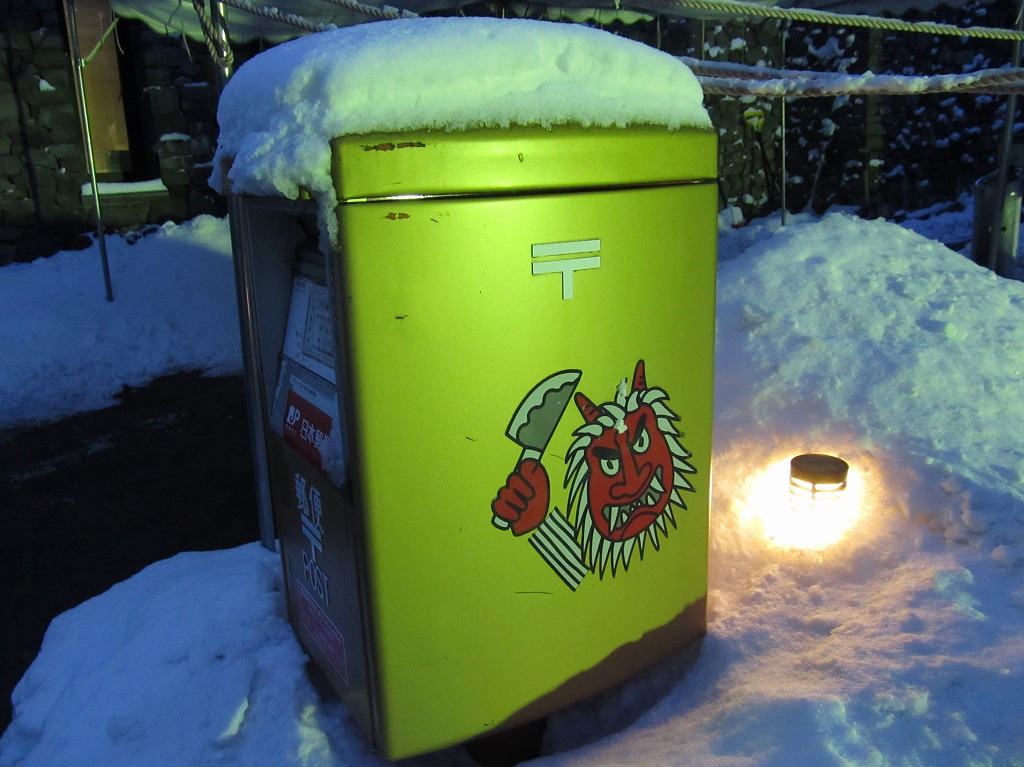
On the way to the Shinzan shrine, there is the “Namahage-kan“. If you have time, you should drop by it. In this place , you can see everything about Namahage. The history, various masks and so on. The highlights are many statue of Namahage. There are 100. If you come into this place, you will be speechless and just stand still.
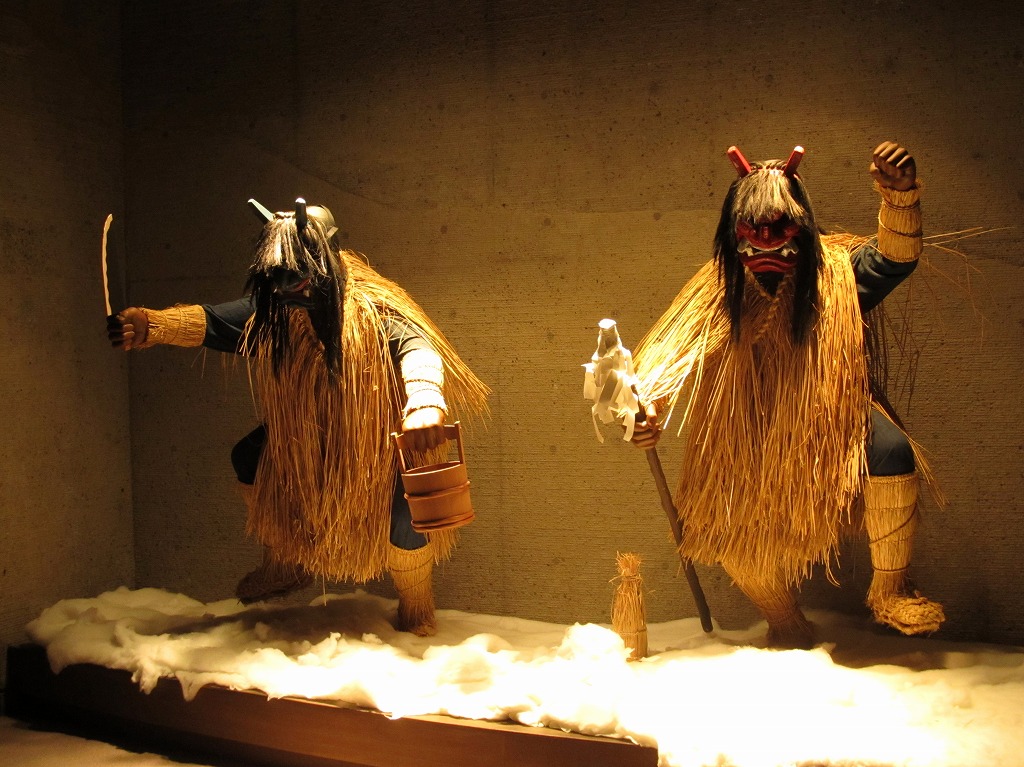
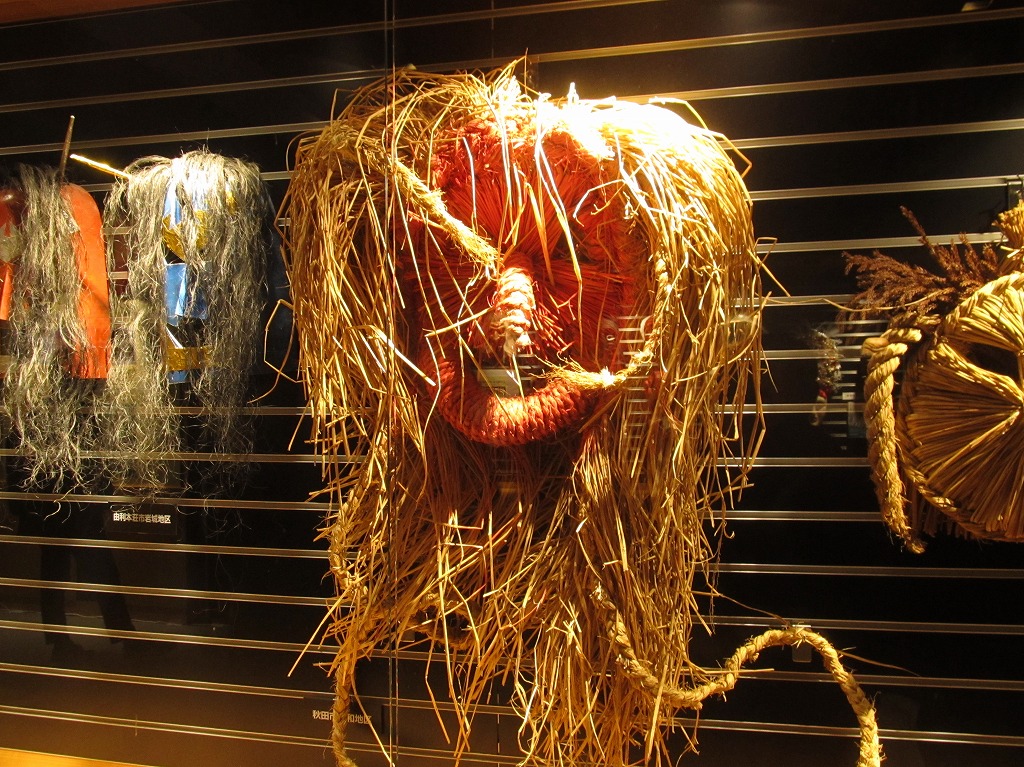
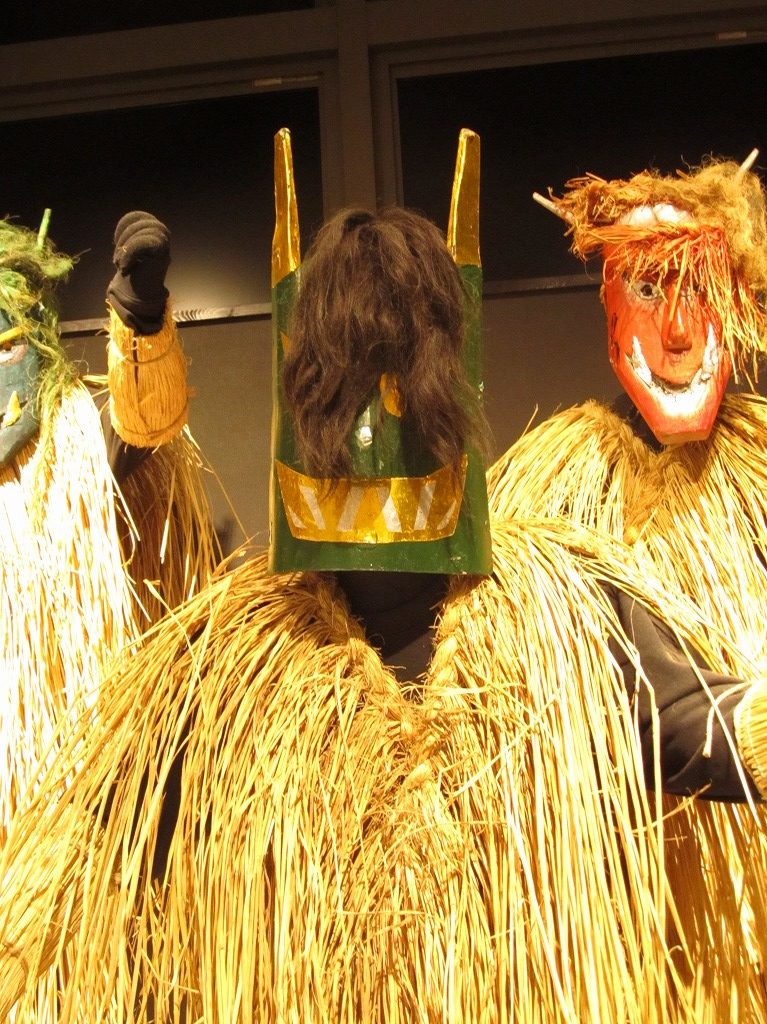
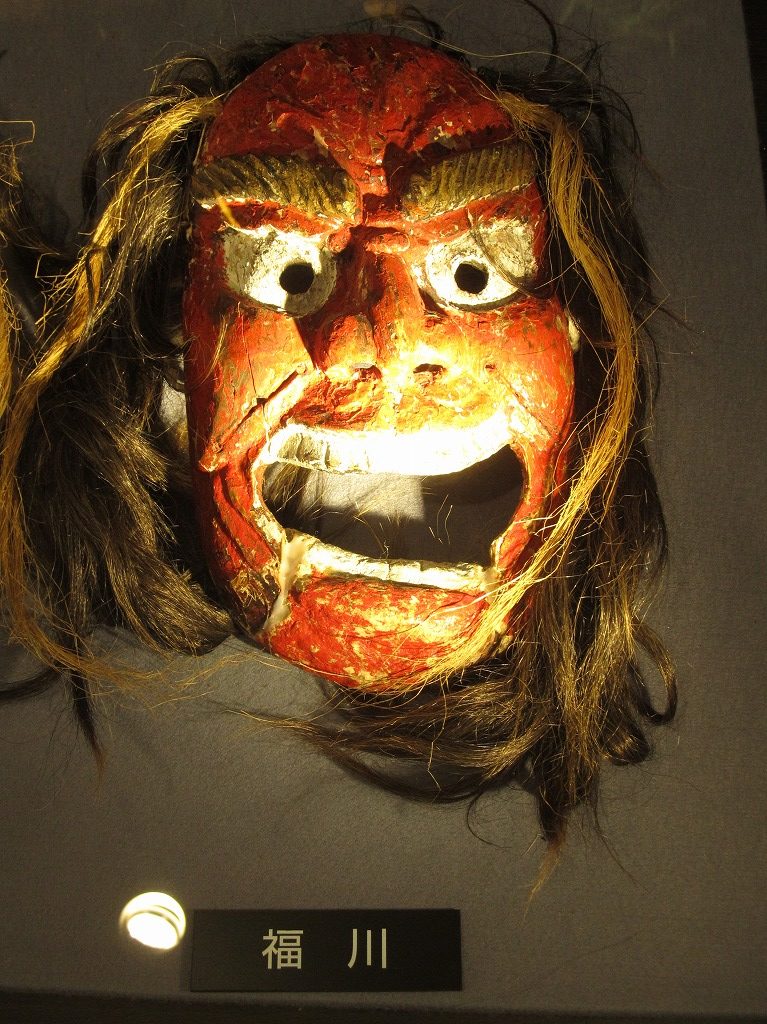
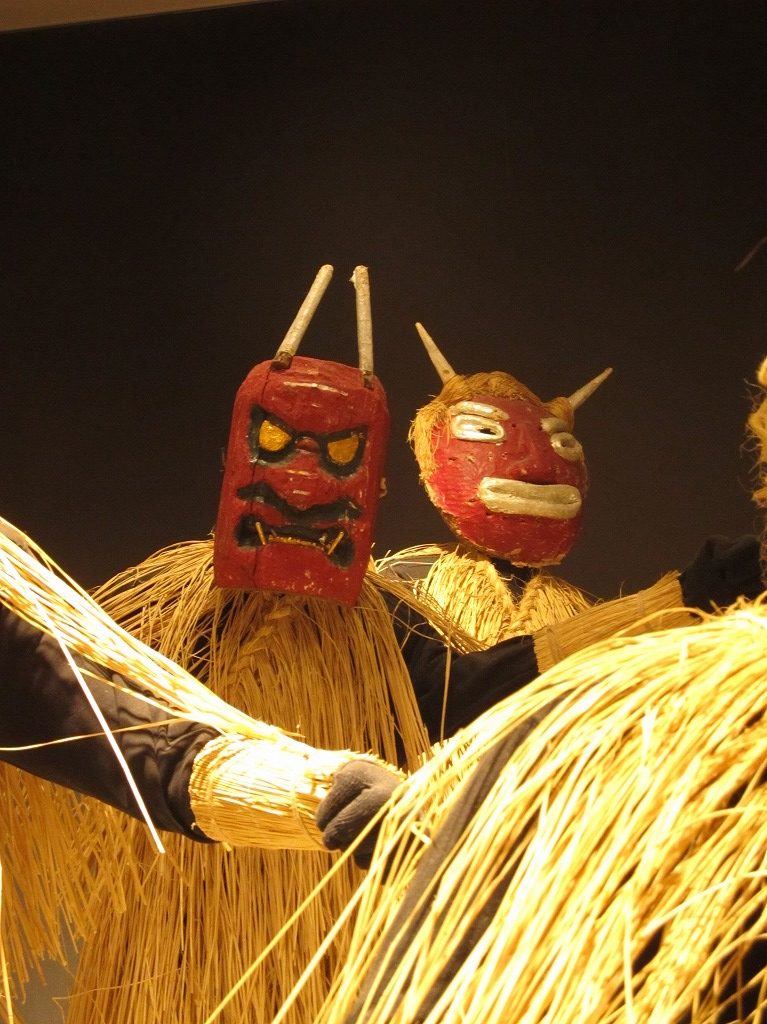
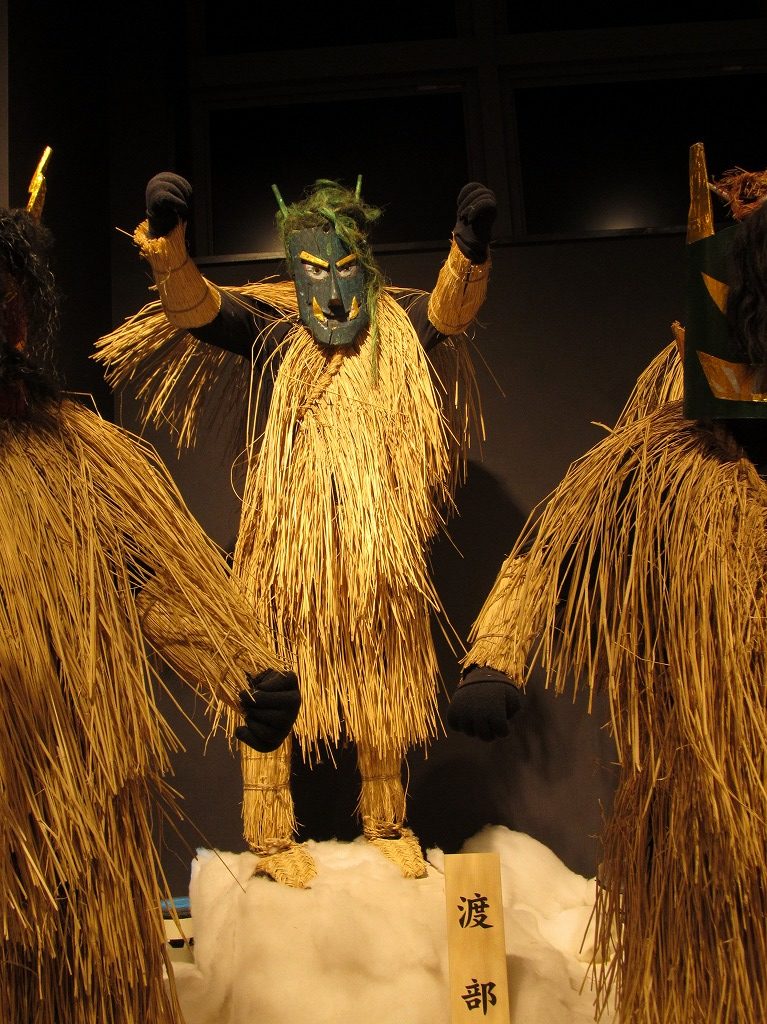
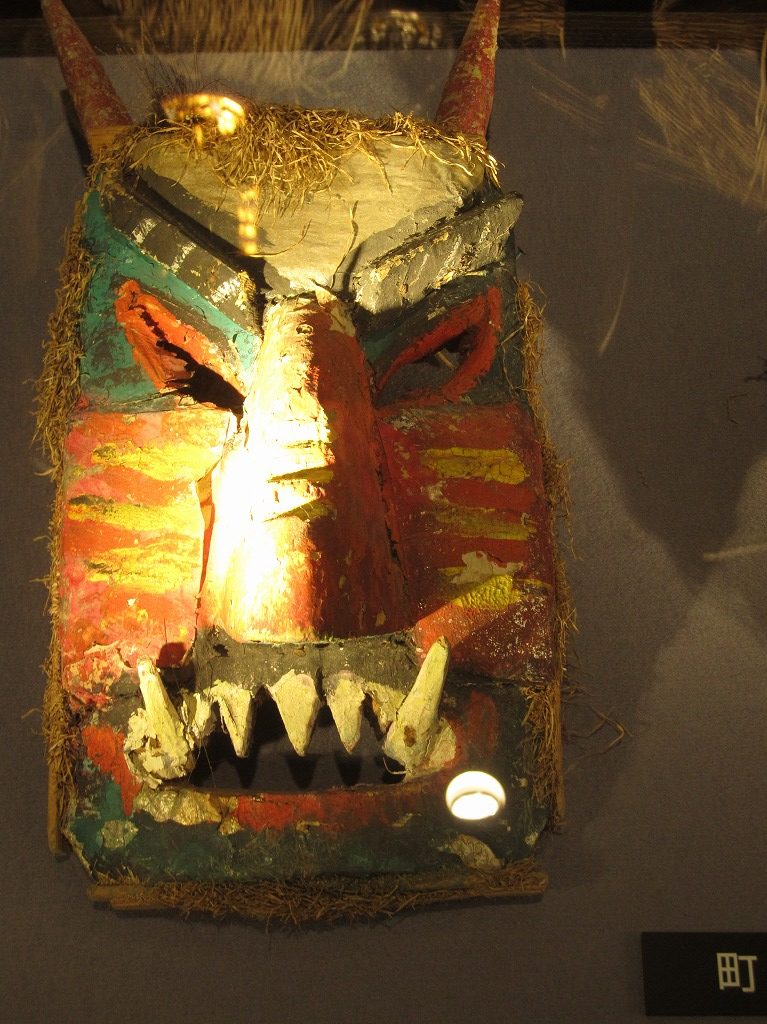
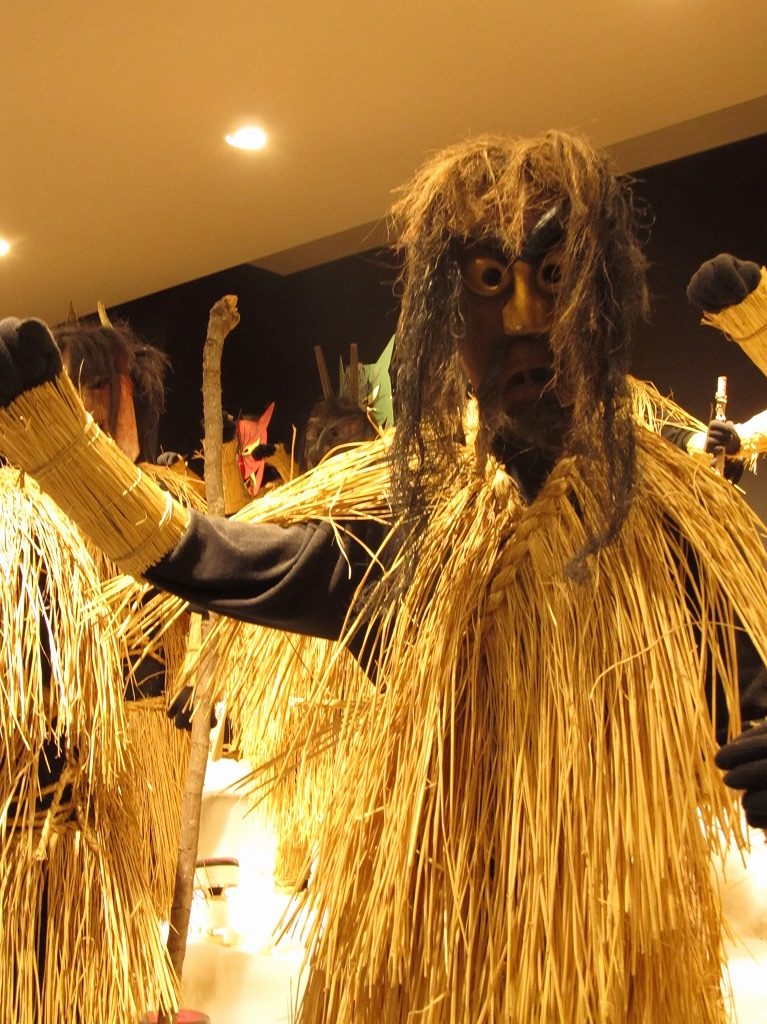
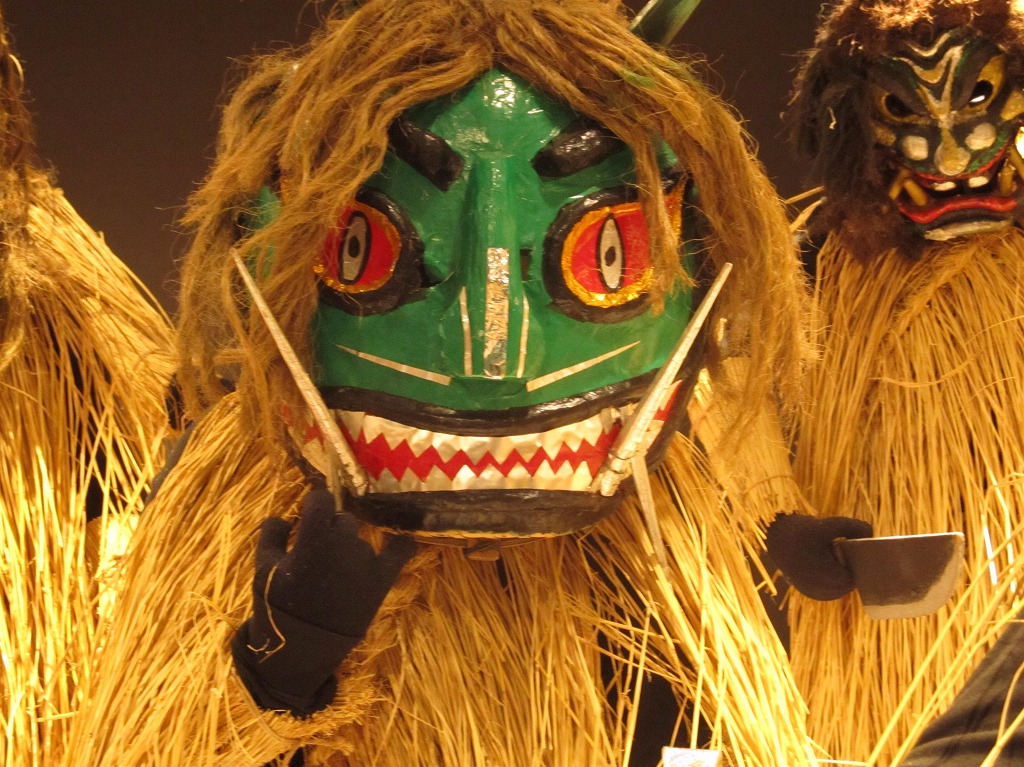
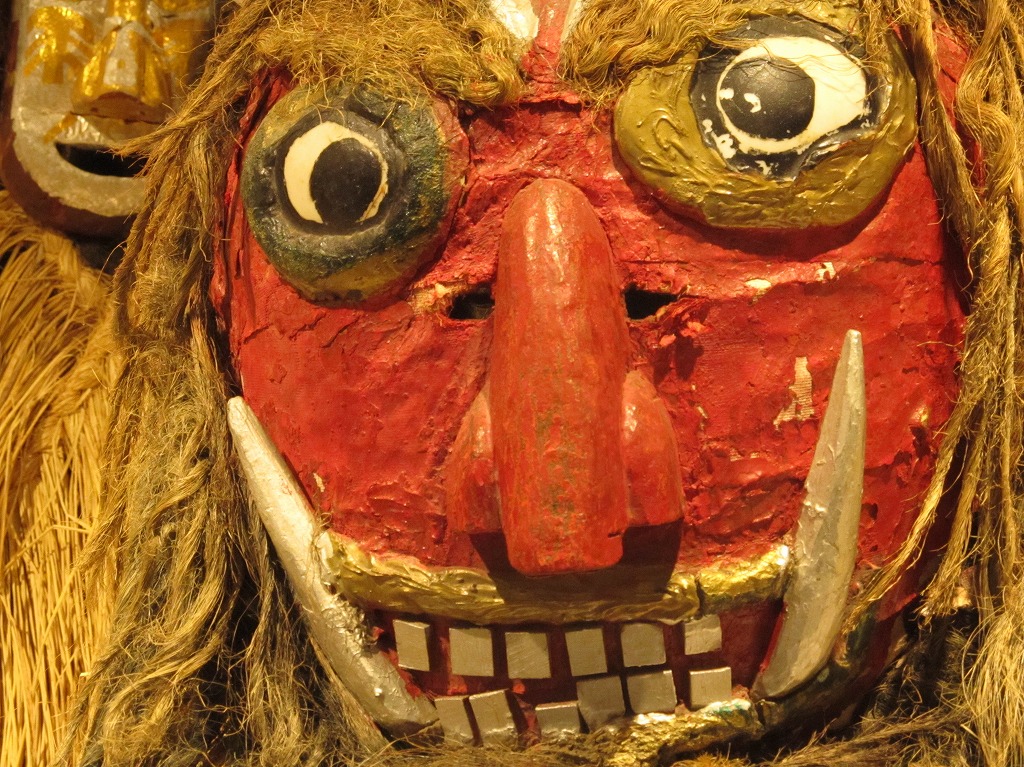
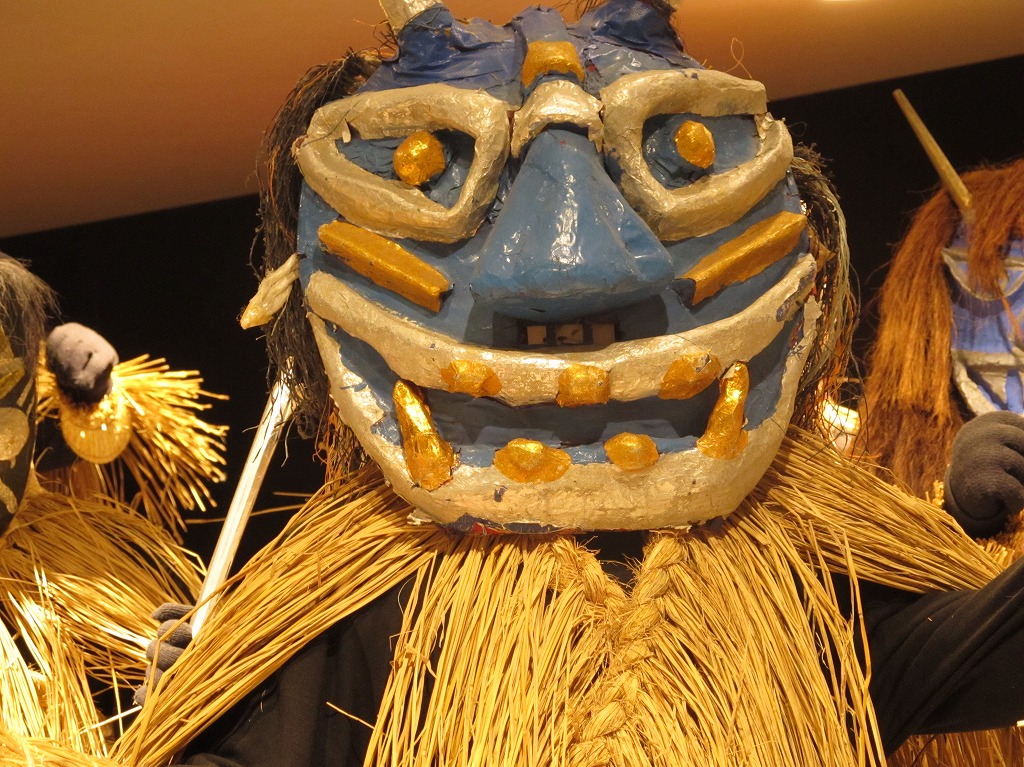
And you will know that Namahage images are not only one. There are no two statues that are the same. Once upon a time, Japanese famous artist, Taro Okamoto praised its primitive power. You will understand it with marvel. And there is also a rich array of goods of Namahage. At this time, its 6 o’clock. We have no more time. The festival has already started. Let’s hurry about.
Shinzan shrine
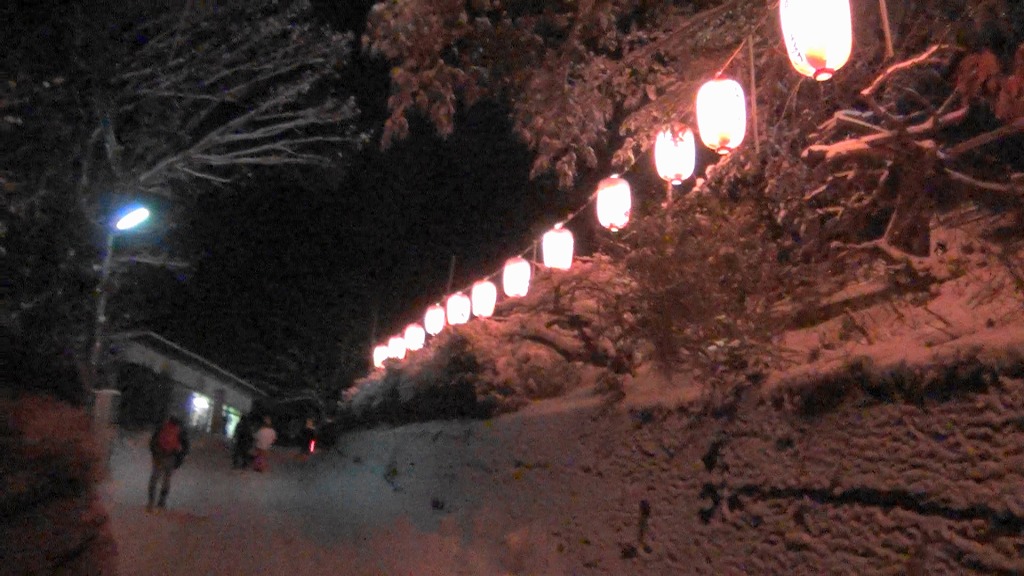
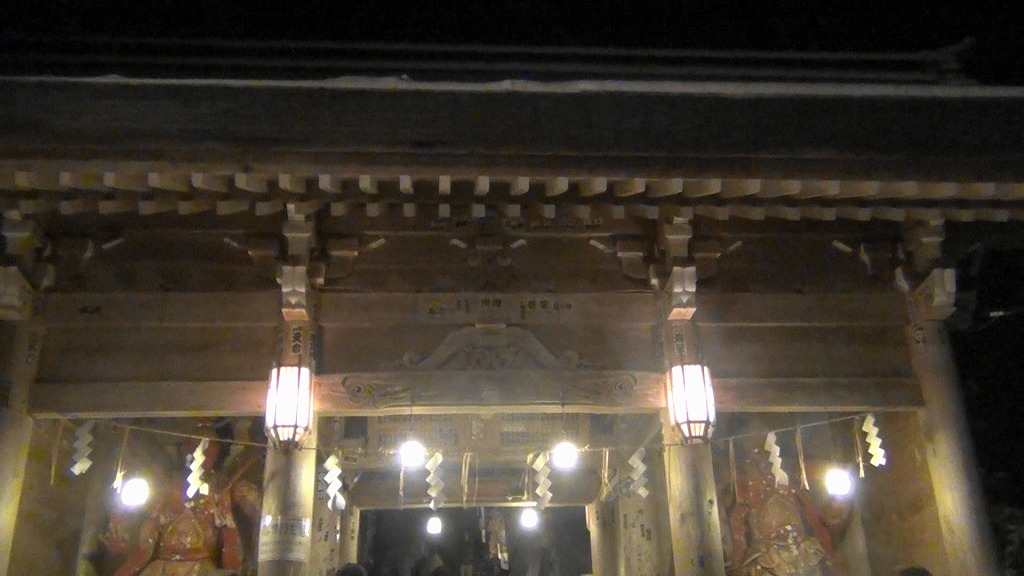
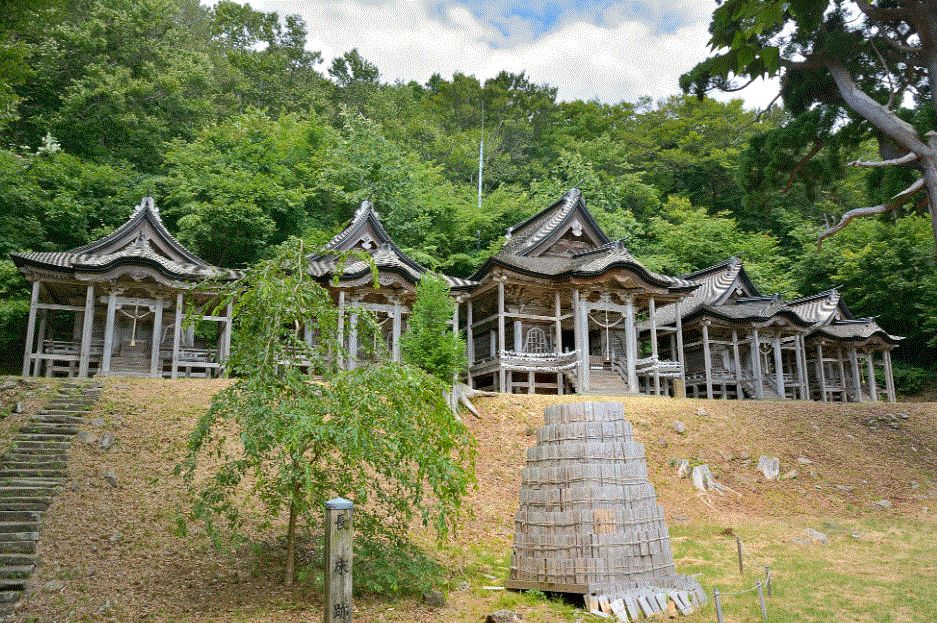
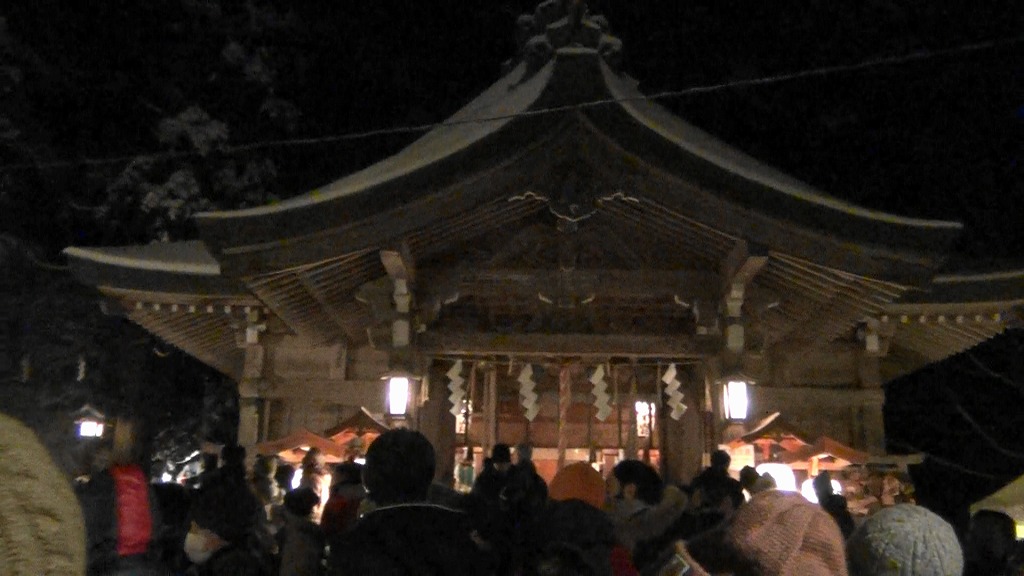
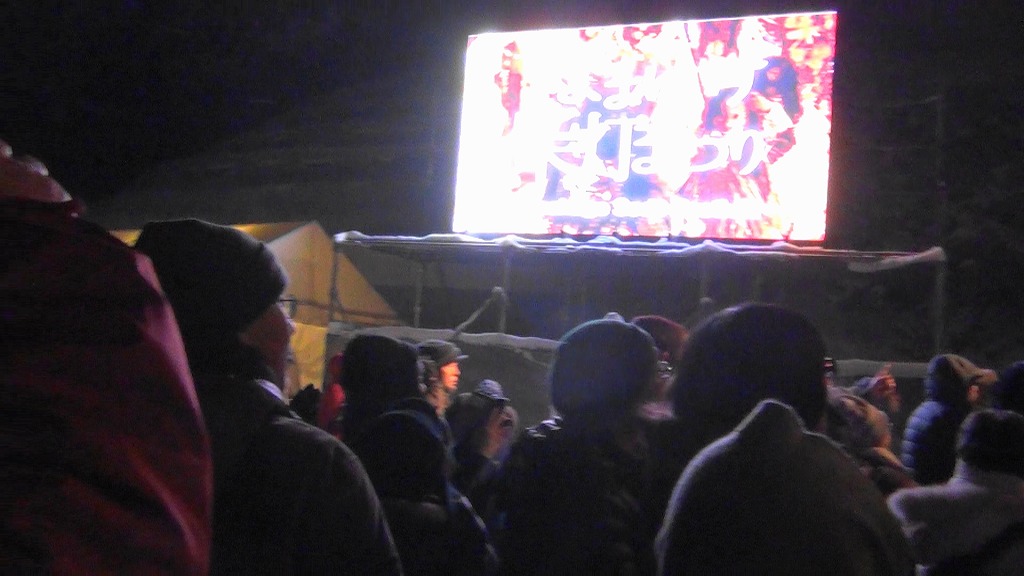
After giving a considerable offering of money (\ 1,000) at the entrance, you enter the Shinzan shrine. It was full of people. Looking over this place, there is a main hall of the shrine (called ‘sha-den’, or ‘hon-den’) in the front of the entrance. If you turn to the left, the other side is a ‘Kagura-den’, and in the center of the open space there is a fire burning. This is called “Sedo-bi”. Behind the main hall, sha-den, is a mountain. A big screen is set. And two staircase stands are set. One is set in front of the sha-den, and another is beside the kagura-den. It costs \ 1,000.
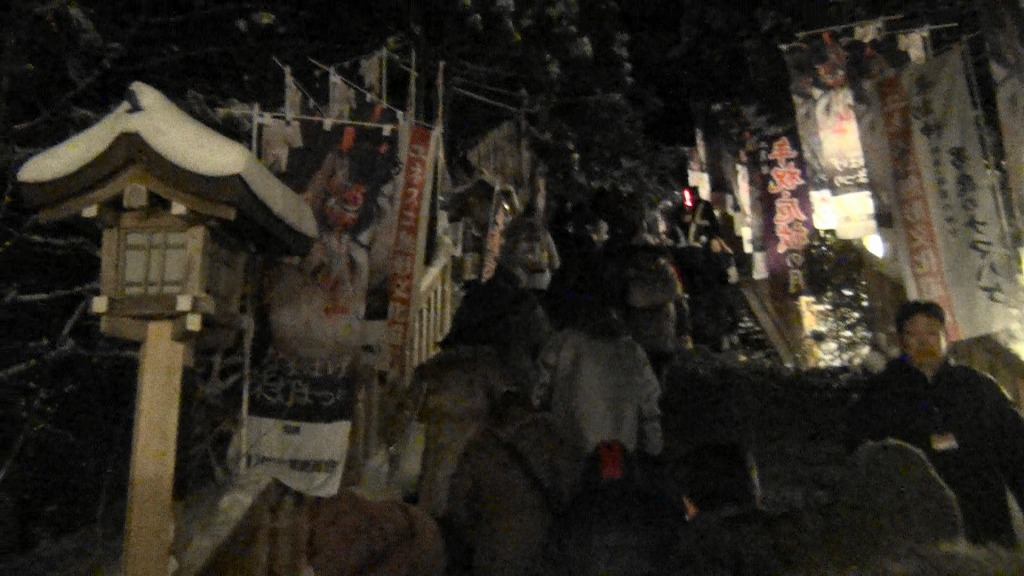
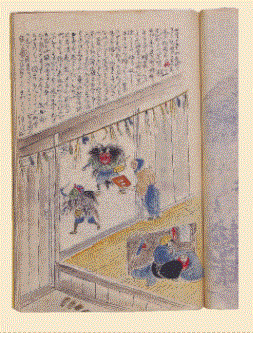
When I reviewed it here, this festival was originally divided into two rituals. One is the Namahage ritual and another is the ceremony at Shinzan shrine. This is called Saito festival. During Saito festival, Shinto priests burn a fire (it is called Saito) and broil rice cakes. Then they give them to ogres instead of humans. Priests did it like that and appeased ogres. These rituals were gathered to make a tourist industory in 1960′, it has continued until today.
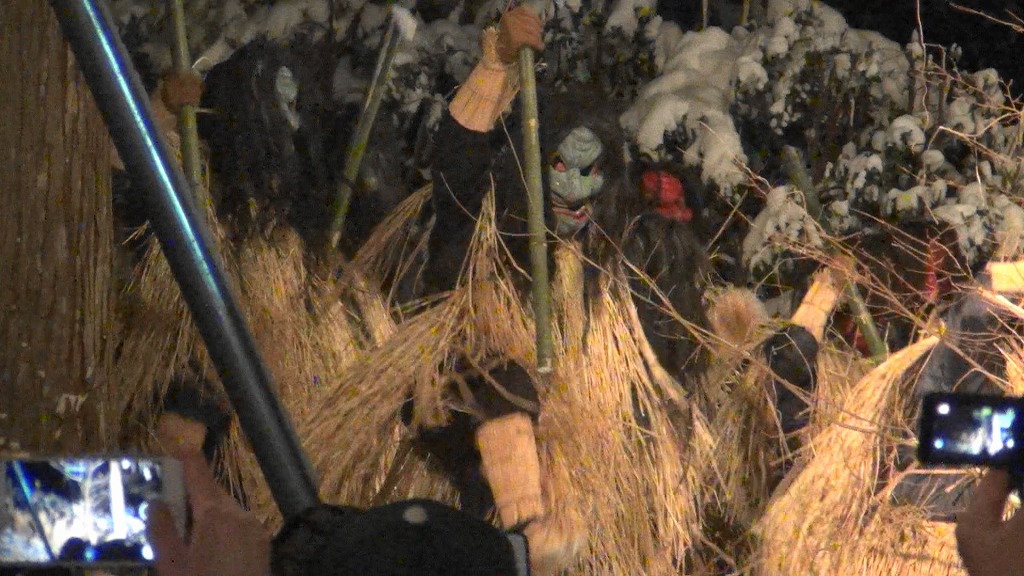
When I arrived, the ceremony of “Namahage nyuukon” was about to begin. The ceremony is goes as follws. A Shinto priest loads masks with soul and hand them over to young men. The young men who are given masks of Namahage wear masks and step on foot and sound it. They changed to a messenger of deity. While many people stare, young men wear masks and step their feet making lots of sounds. They changed into Namahage. After this ceremony, they went over the mountain once. So I moved to the front of the Kagura-den. Many people moved with excitment, rushing to the front.
Namahage ceremony
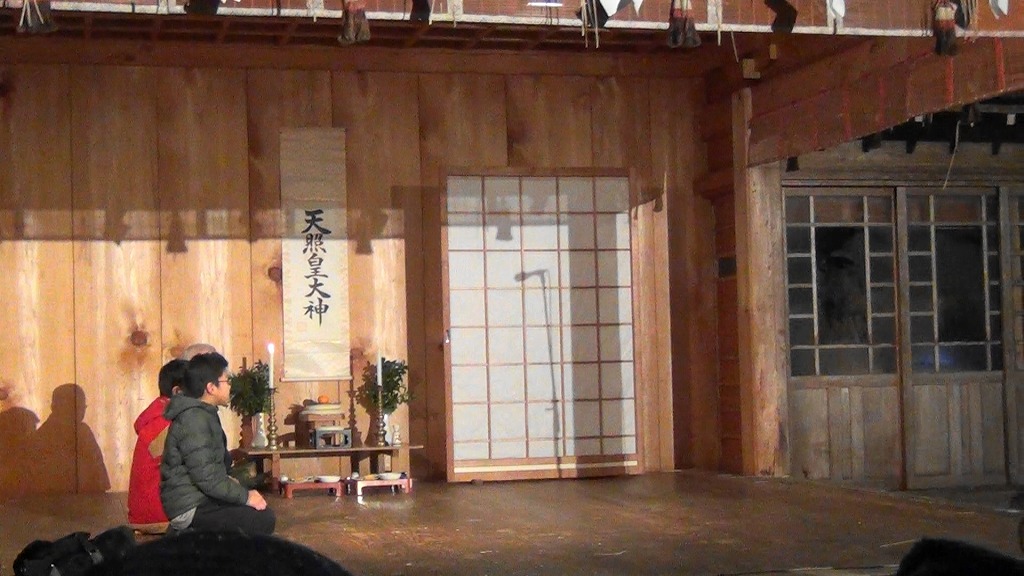
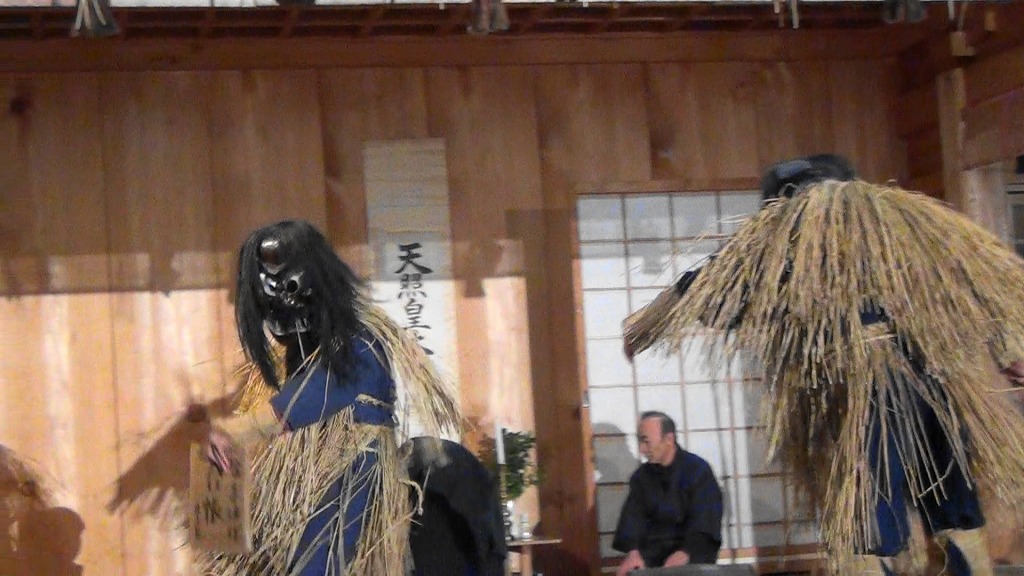
In Kagura-den, the ritual event reproduction was going to just begin.
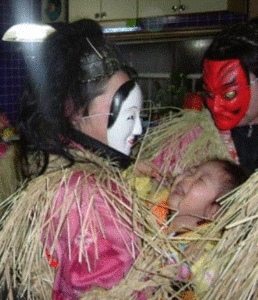
At first, the manager comes in and tells the master of family that it is almost time for Namahage to arrive. Before long, the outside becomes noisy, and two Namahages appear. They stamped their feet on the entrance and cry with loud voices.
“Aren’t there crying children?”
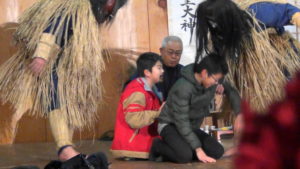
They are indeed powerful, so the crying of the child happen early. When looking at them, surely, they are seen to be somewhat arrogant but in fact, they are very polite and behave property. Manners are decided according to a rule. For example, when they enter a house, they stamped feet on the ground seven times, when they sit down before dining, three times, and when they leave, five times.
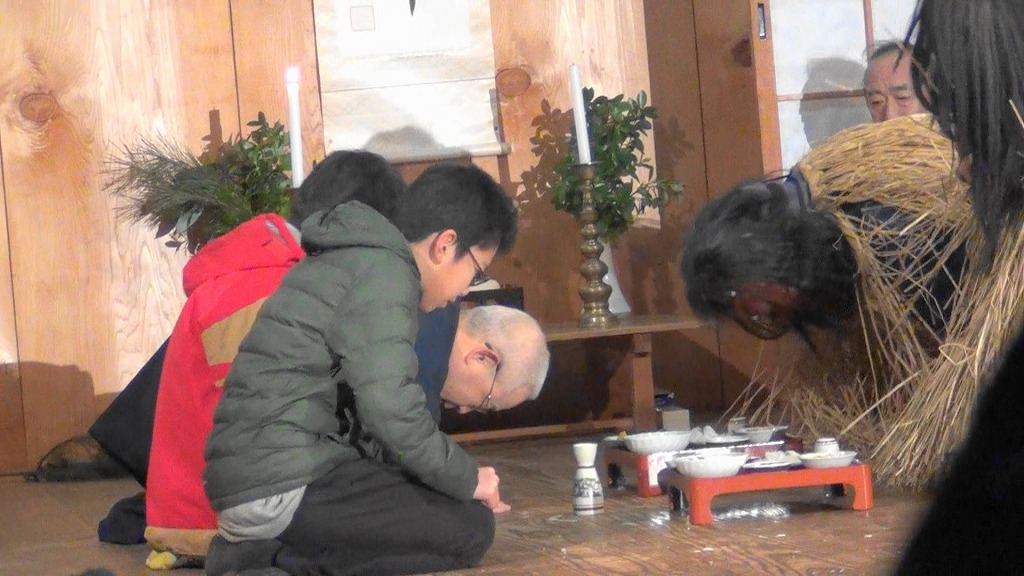
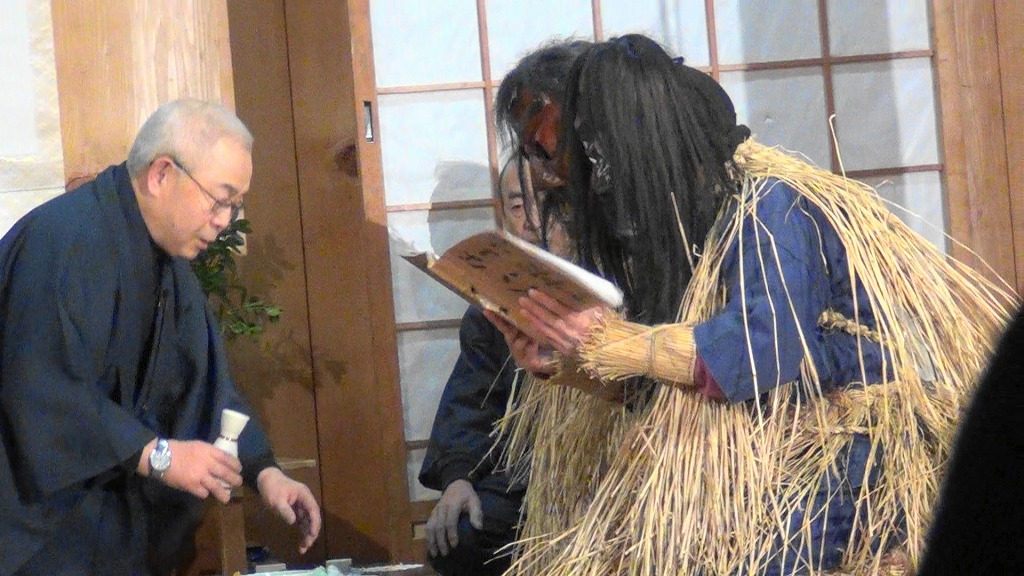
After displaying the proper manners they sit down, they greet each other. Laughter happens from the audience in the gap. At first, the master treats Namahage with liquor.
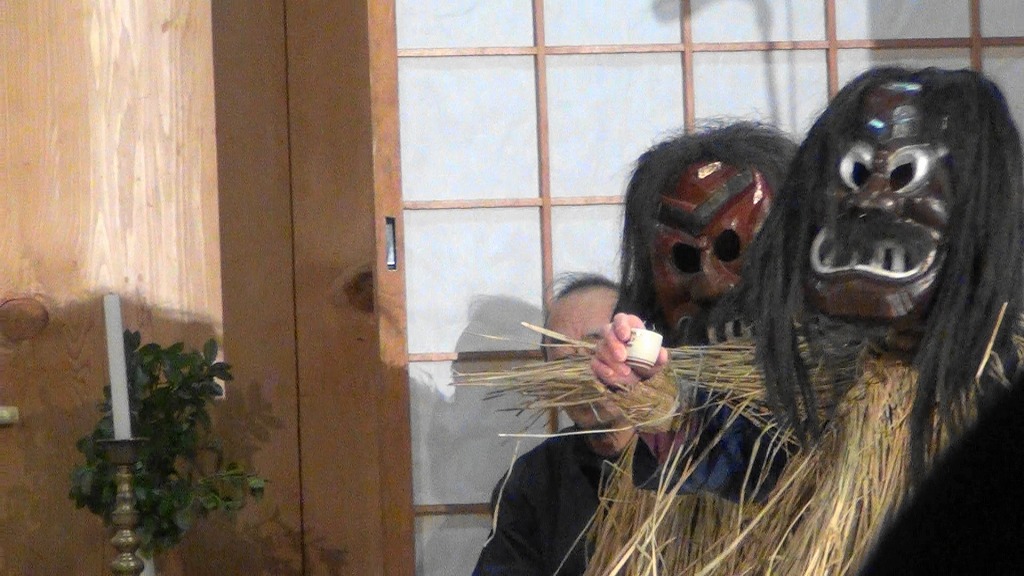
“This is good sake !”
“It comes from Akita Komachi.”
“Akita Komachi ? That explains why it is delicious sake.”
Akita Komachi is a brand name of rice. As is expected, it is Namahage. They don’t forget to advertise Akita.
“By the way, are there not children who do bad things or the bride not lazy ?”
“No, there are not. Grandchildren are working hard and help the family. I hear the bride is working well fortunately.”
“It’s OK, but is it true ? Don’t you protect them ?”
“No”
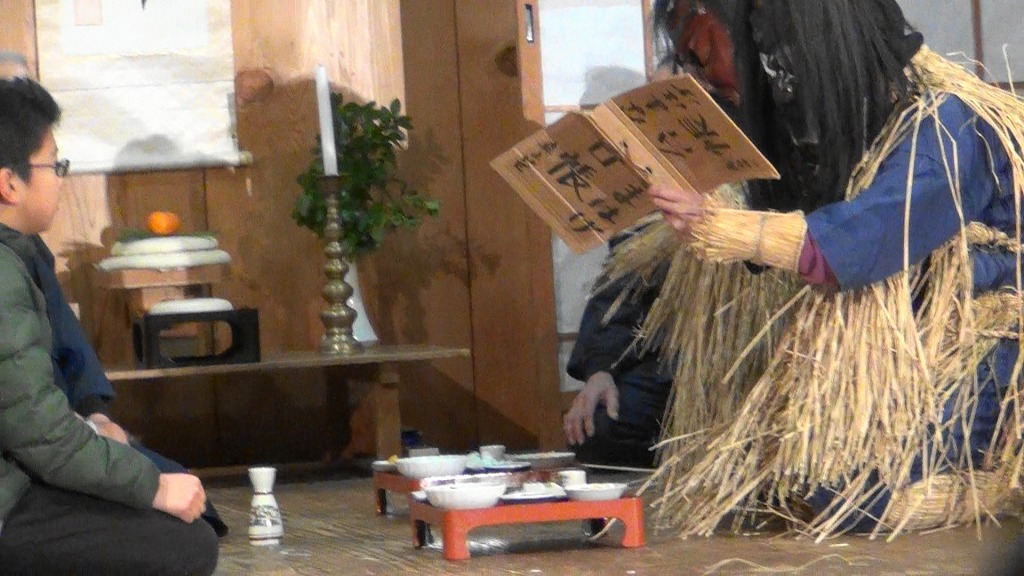
“We always see all from the mountain and we write in this account book.”
While saying so, he takes a book and opens it.
“The book says that grandchildren always play games, not study….”
Laughter happens again.
“No,no. They are good children and my bride work better than nyone.”
Master intercedes desperately.
Let it be revealed from here, Namahage is not only attraction. The ceremony was intended to demonstrate the father’s authority as the head of the family by exorcising demons and strengthening unity of the family.
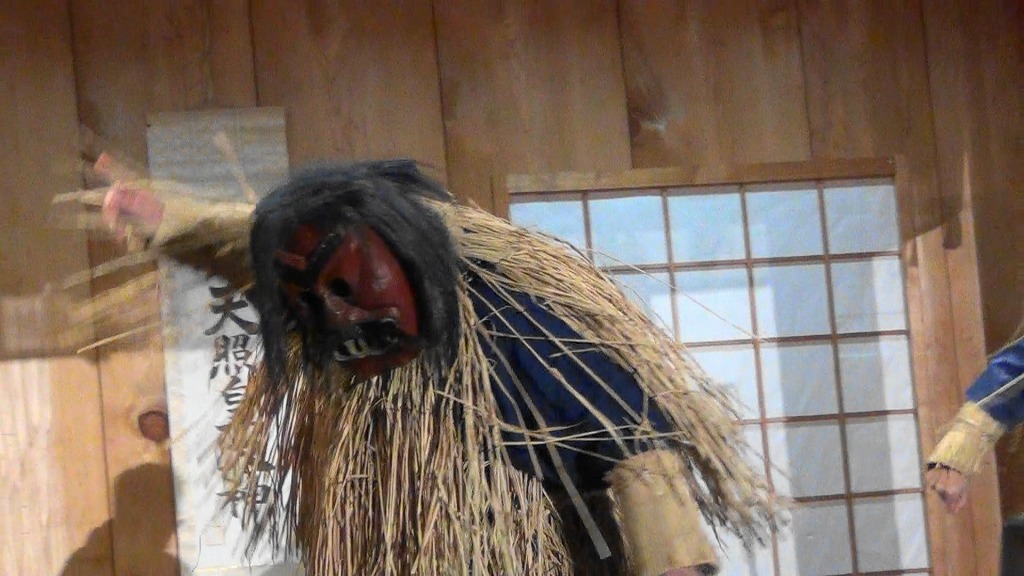
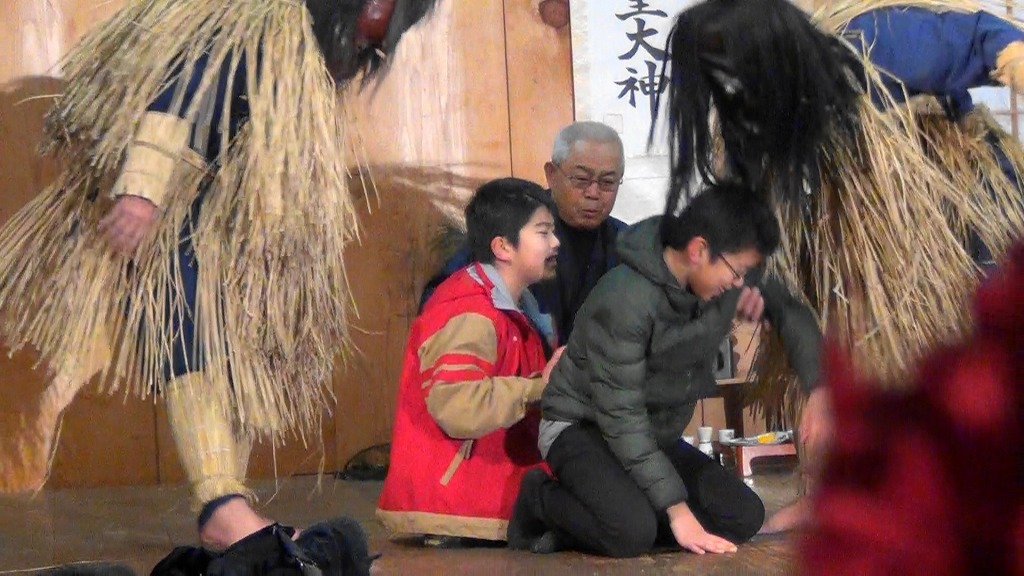
Would they understand it for the time being, Namahages stand up and stamped their feet on the ground three times according to the rule.
“If you re lazy, we will take you out to the mountain !”
“Hey master, If you find lazy people , clap your hands three times. We will come down immediately from the mountain.”
They said so, and left noisy and wildly.
Namahage dance and drum
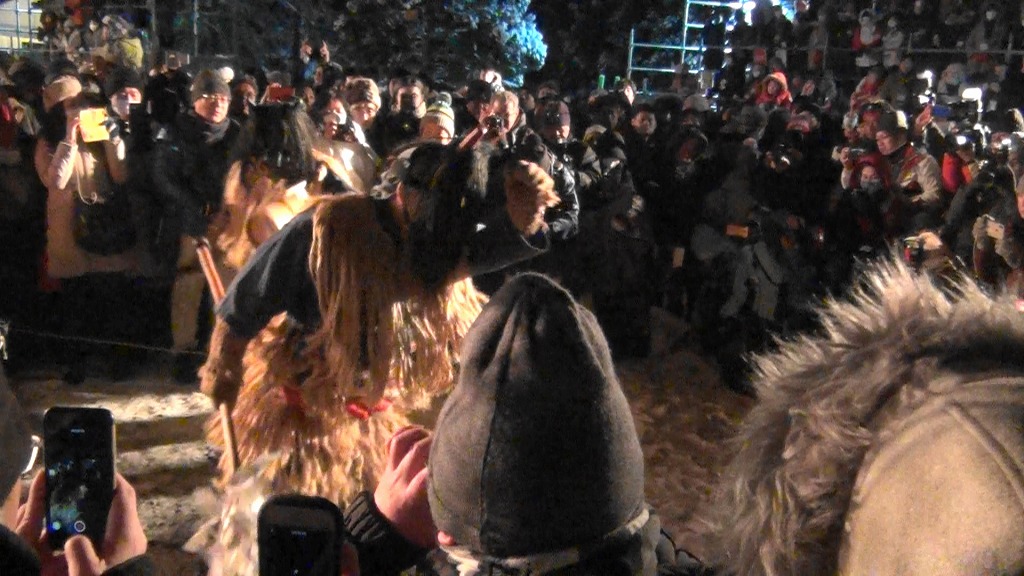
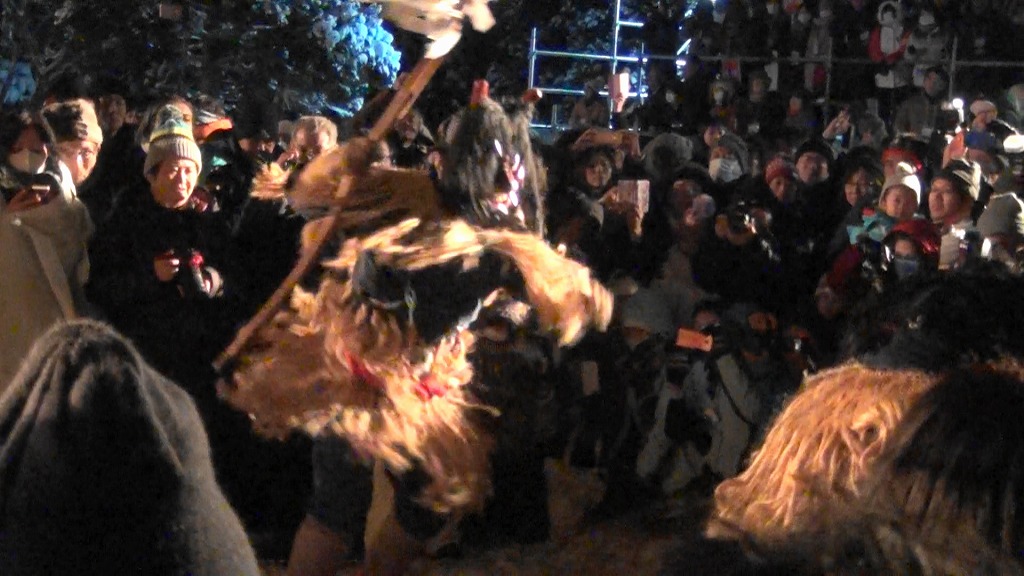
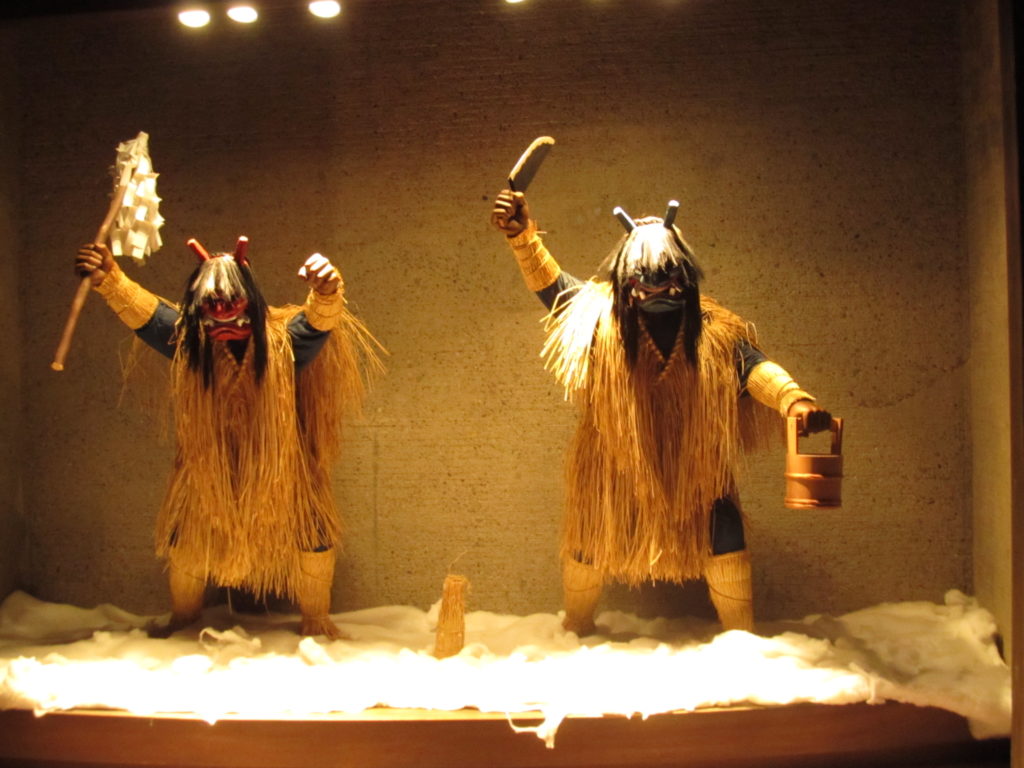
After ritual reproduction, the Namahage dance starts in front of the fire in the center of the avenue.Terribly sounding two Namahages who hold a big kitchen knife and a wooden pail dance with jumping or turning. It finished after five minutes.

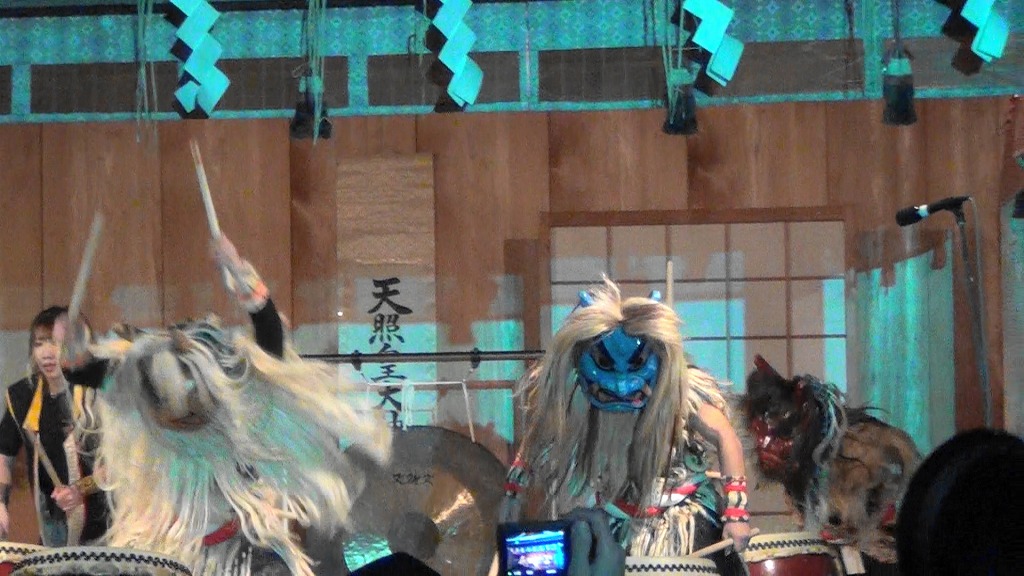
When it is over, the next program is prepared in the Kagura-den again. Several Japanese drums “Taiko” were set, and a Chinese gong “Dora” sounds portentously. The Namahages drum begin. While two women beat drums, several Namahage emerge. They shout loudly, stamp on the floor with their feet, and are graring at the audience. And their raise arms in a pretentious state, they gradually begin begin to drum.
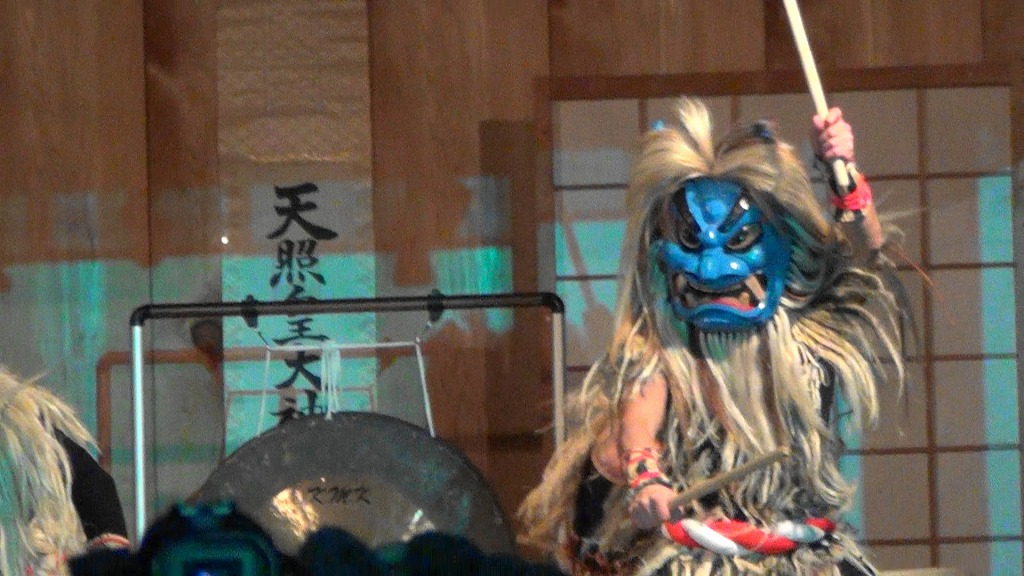
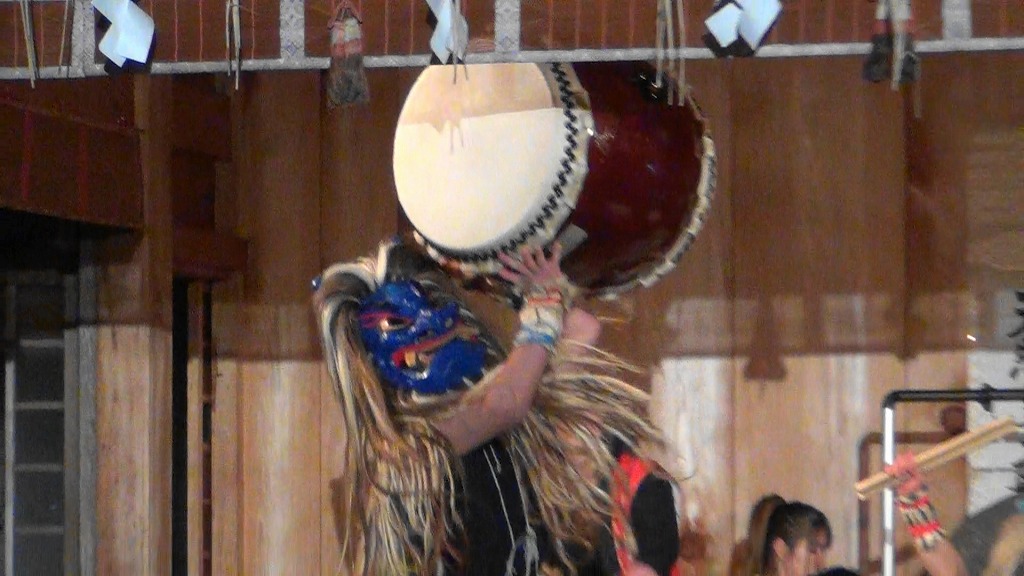
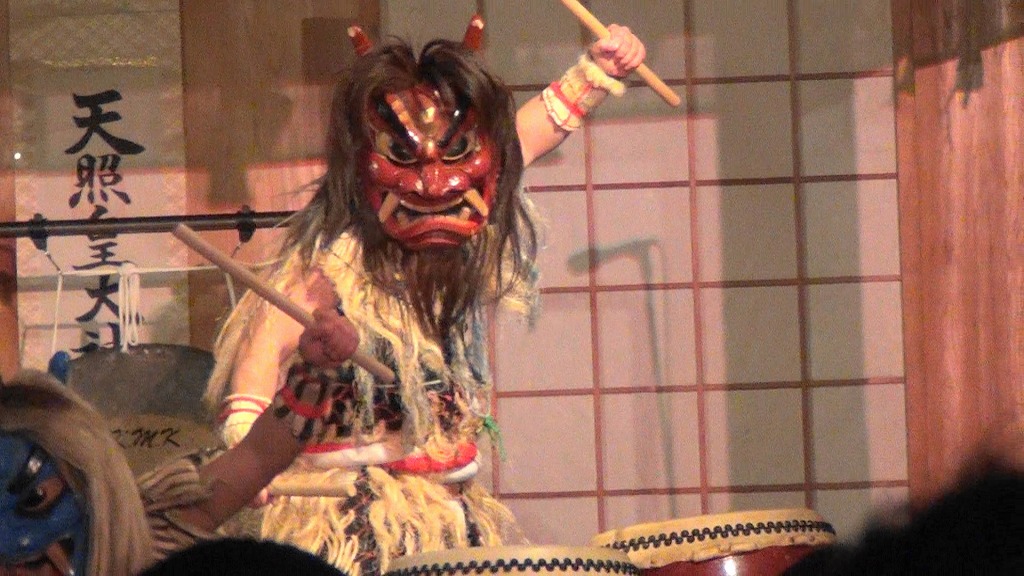
They move violently and intensely. Lights change from red to blue, and green or other colors. That scene is enough to invite audiences to this fantastic world. This event lasts about 10 minutes. The performing group are change every day. Today’s performer are “Onga”. Yesterday was “Ogakko”.
Namahage go down
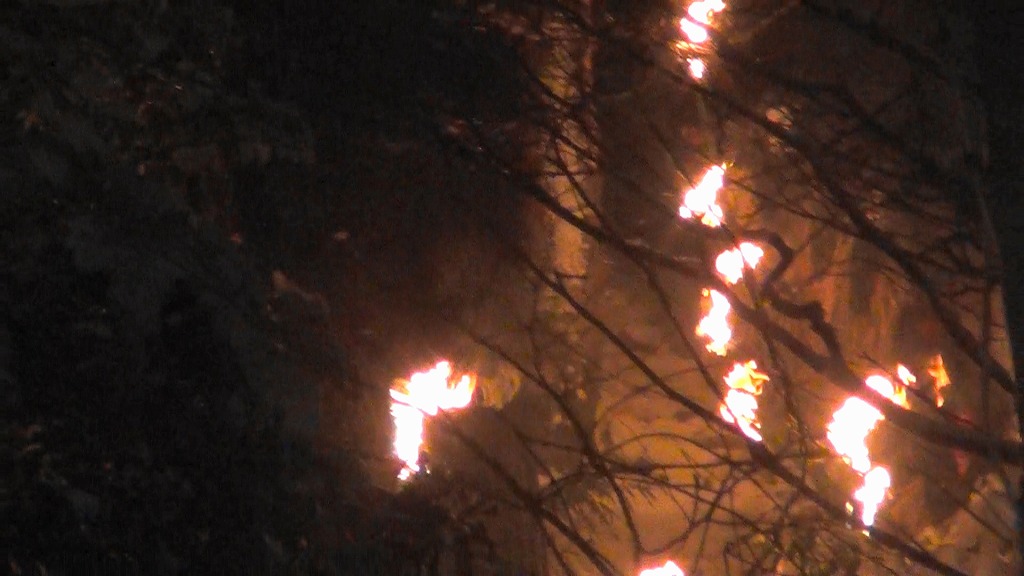
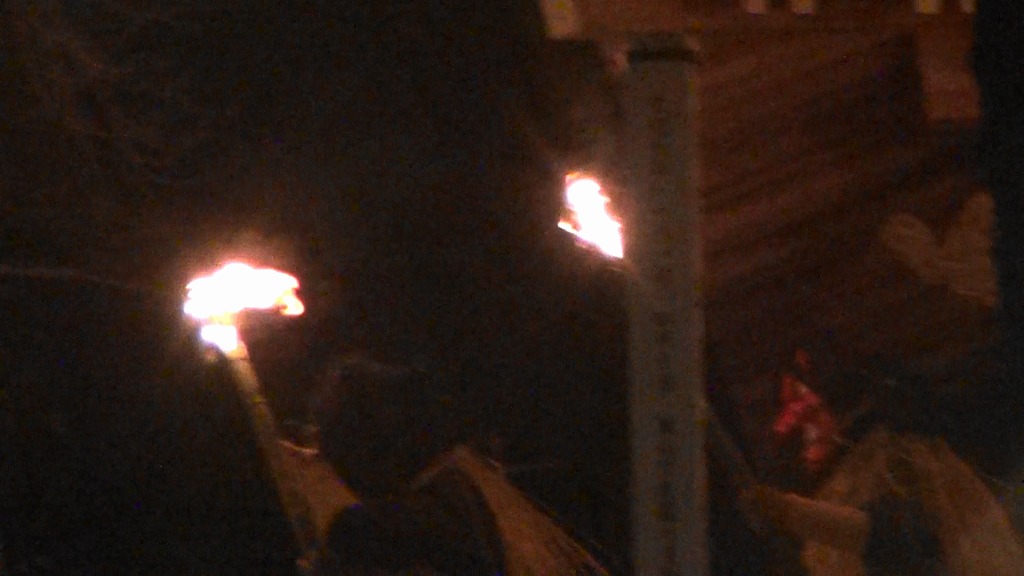
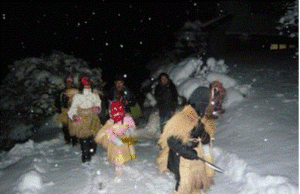
“Oh,Oh” loud voices echo in the dark mountain, before long the fire of torch can be seen between trees. One emerges ana two or three…the number s are increasing. Many Namahages decent from a mountain. The biggest highllight begins.
“Aren’t there crying children ?”
“Aren’t there lazy brides ?”
“If we find such person, we have to tear off their ‘namoni’ !”
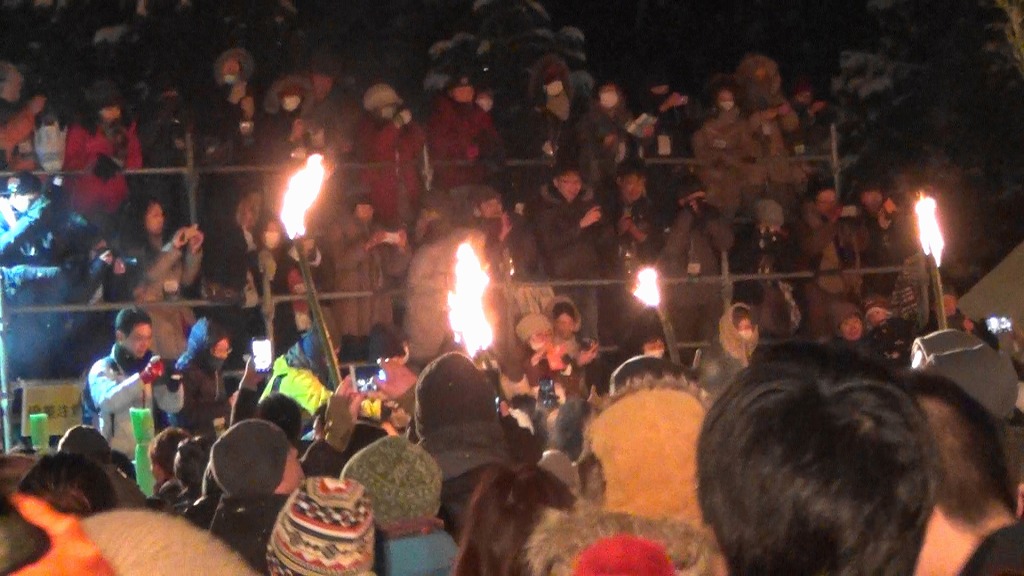
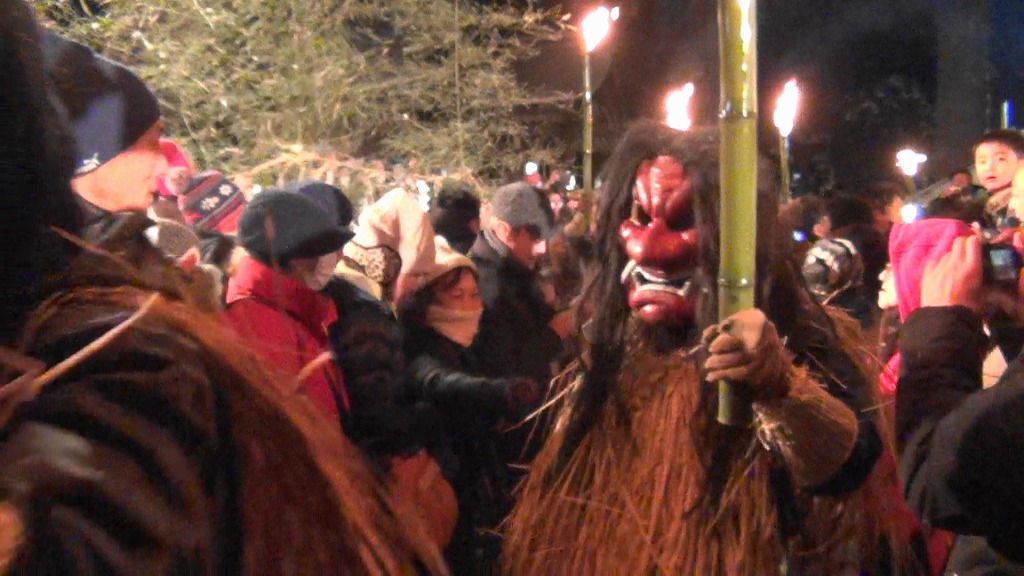

Namahages walk around the venue while boring their way through the crowd. When they came in front of stair-type stands, they stamp their feet on the ground . There is a legend that states, if a person picks up straw which fell from Namahage’s cape, the person will take fortune, people get into a fight luckily.The place is extremely crowded.
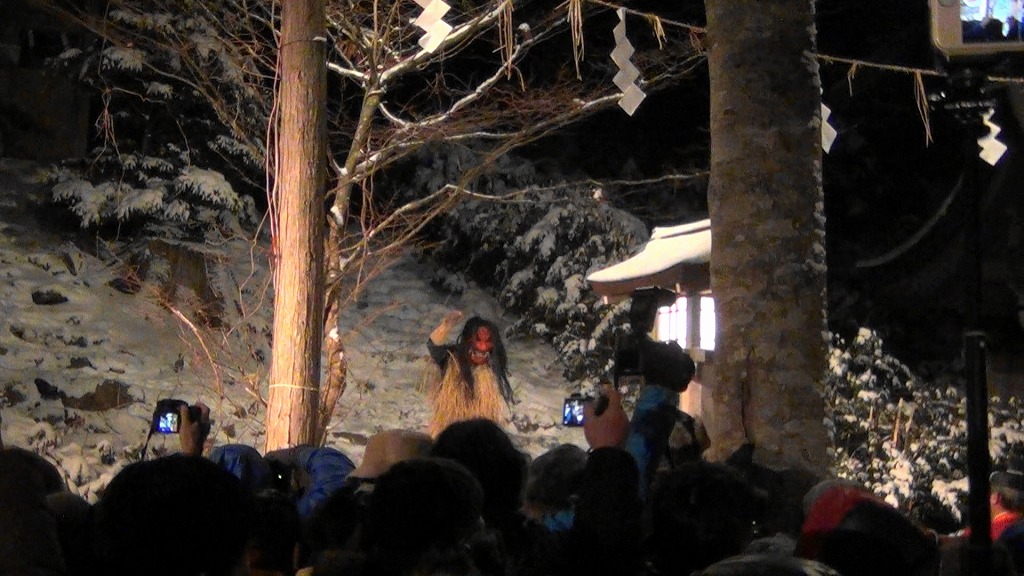
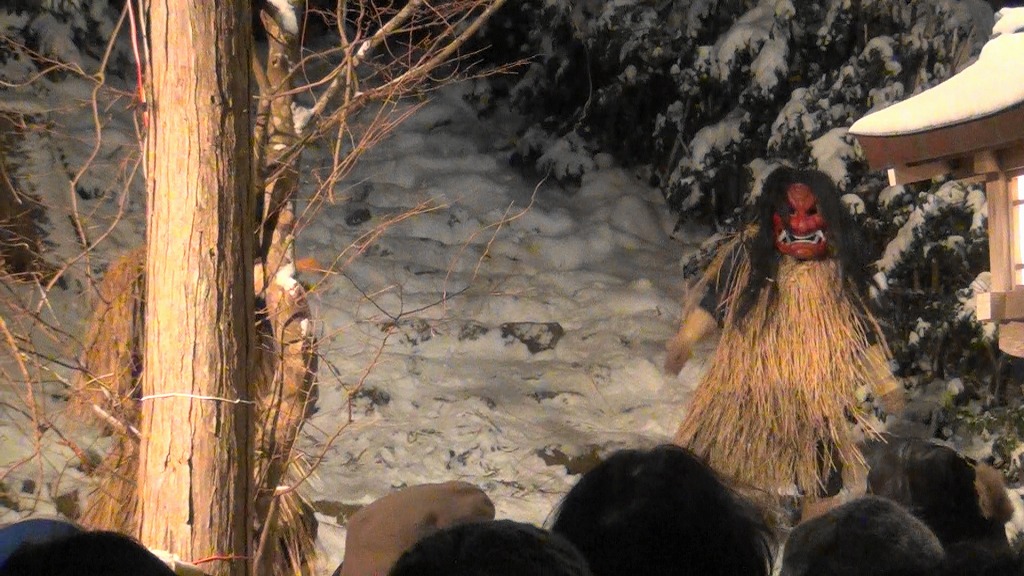
While people are still excited, the next program starts. In front of “Hon-den”, Shinto priests give a rice cake broiled to Namahage. This program combined originally Shinzan shrine’s ceremony and ritual of Namahage that people give some rice cakes to Namahage when they leave. It is done here on purpose, when Namahages are irritated without being able to really receive holly rice cakes. By as by Namahages took rice cakes, and came back to the mountain.
Ending
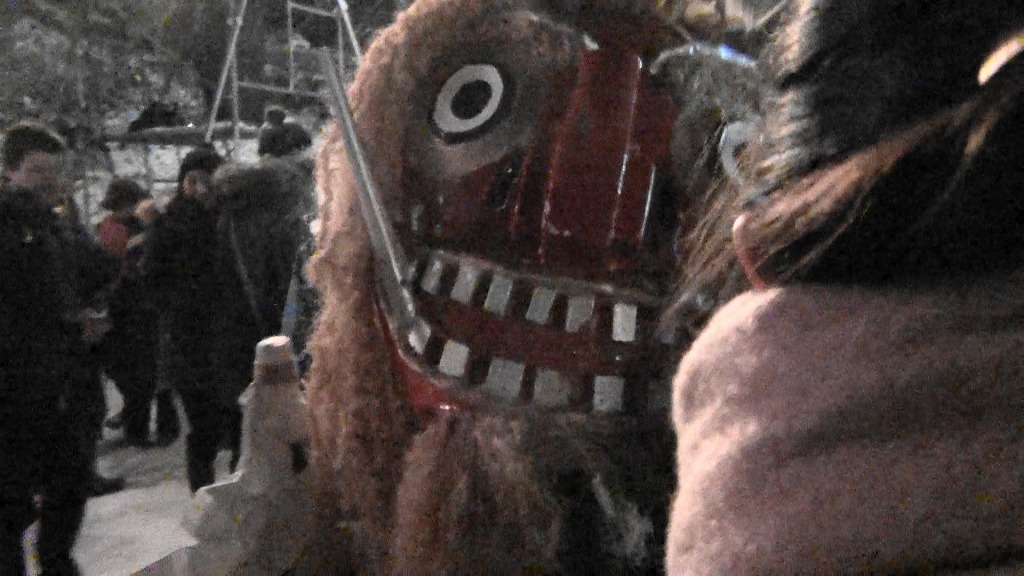
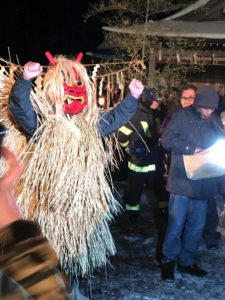
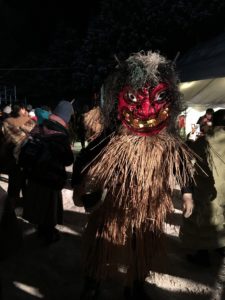
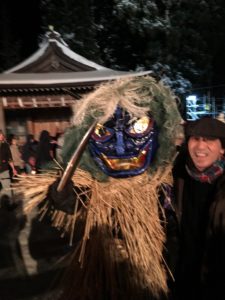
At last, “Sato-no”namahage break into avenue. “Sato-no-Namahage” means Namahage of each regions in Oga peninsula. Namahages with various faces walk around. We can take a picture with them. So one person goes together with one Namahage, if you are alone, you can ask to take a picture with Namahage. In addition, you can place some rice cake s in front of “Kagura-den”. It is now about 8 o’clock.
We must return soon. When I want to the bus parking area, there were several long lines for waiting for the bus. One will go to Oga station, another will go to Oga onsen (hot spring) or each hotel. But you don’t have to worry. The bus will reach the station on time. In the train to Akita station, I felt that people were still excited and satisfied. The train is filled with Fantastic memories.